

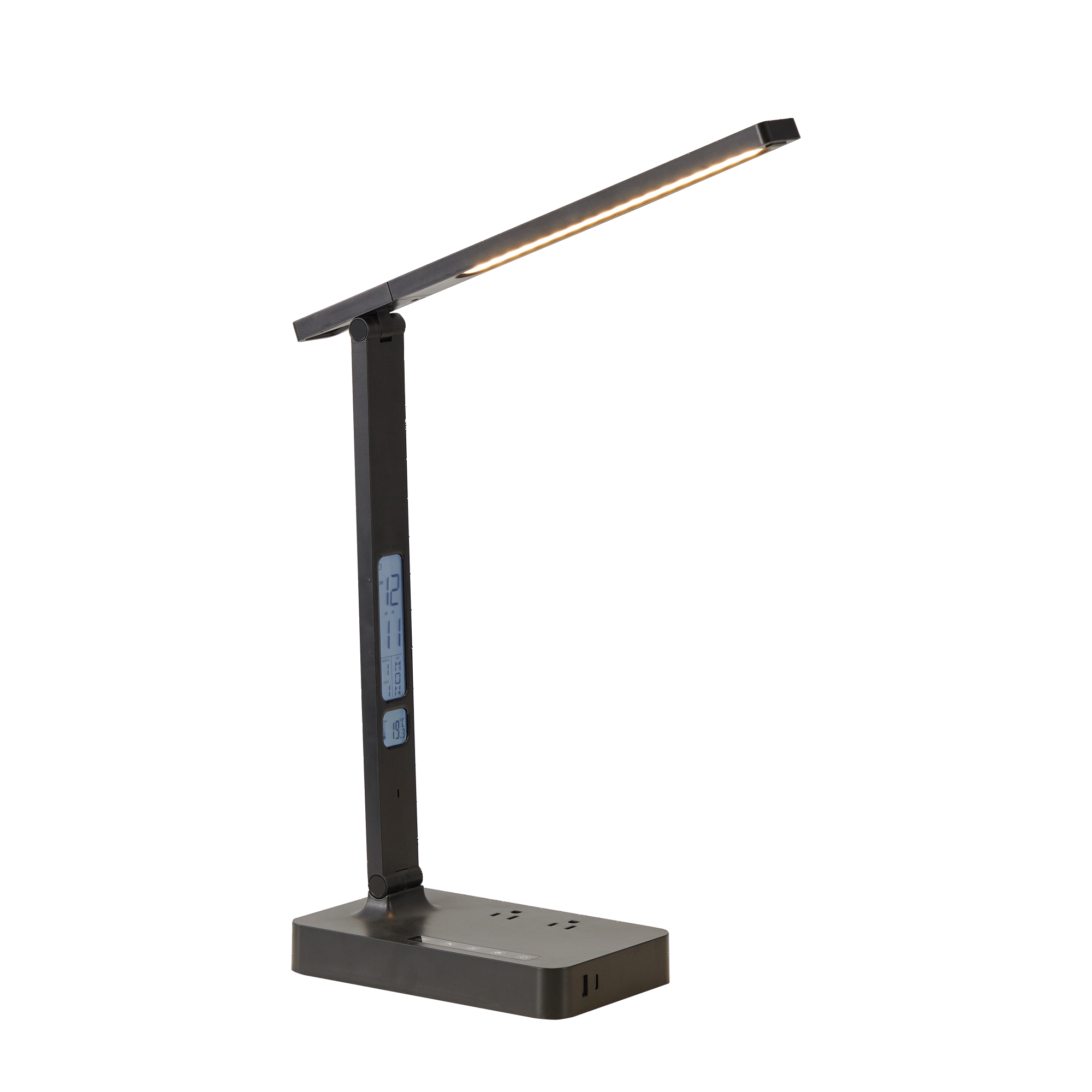
A rechargeable LED desk lamp is both a lighting product and a battery-powered device. If an RFQ says only “2000 mAh rechargeable battery,” suppliers can still quote different cell manufacturers, chemistries, protection circuits, charging behavior, usable runtime, packaging, and transport documentation. The samples may look identical while the commercial risk is very different.
This guide is written for importers, distributors, private-label brands, and sourcing teams. It provides a practical specification and sample-test framework; it does not replace a laboratory safety assessment, dangerous-goods classification, or advice for a particular market and transport route.
1. Control the battery as a defined component
A battery should be tied to a controlled product revision, not described as a replaceable commodity. Two cylindrical cells with the same printed capacity may differ in chemistry, discharge capability, internal resistance, protection, production date, and traceability. A supplier change after sample approval can also change charging time, runtime, heat, or transport evidence.
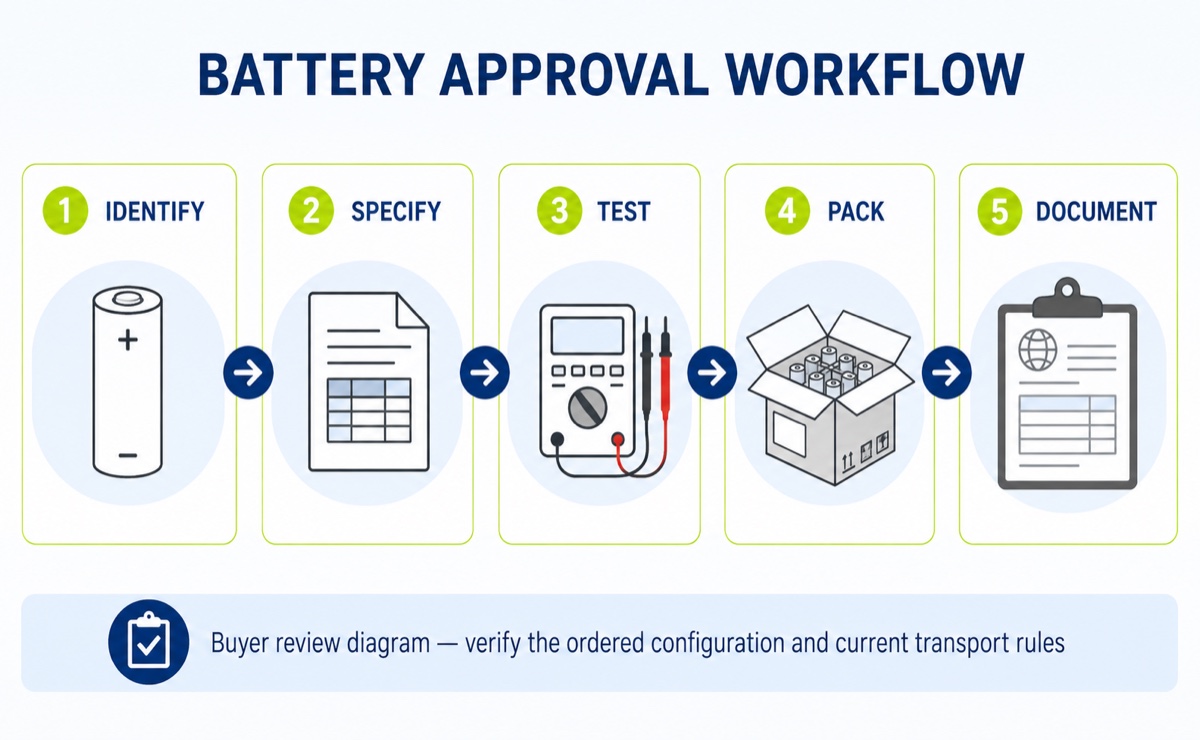
Start by identifying whether the lamp contains a single cell, a battery made from multiple cells, or a removable pack. Ask for the cell and pack manufacturer, model, chemistry, nominal voltage, rated capacity, watt-hour rating, physical size, connection method, and date or lot coding. State whether substitutions require written buyer approval and a new evidence review.
| Specification field | What to write in the order file | Evidence to review |
|---|---|---|
| Battery identity | Cell and pack maker, model, chemistry, configuration, dimensions, connector, and polarity. | Datasheet, sample photographs, label or date code, and bill-of-material reference. |
| Electrical rating | Nominal voltage, rated capacity in Ah or mAh, watt-hours, charging input, and permitted charger or adapter. | Controlled specification plus measurements on the ordered sample. |
| Protection and charging | Protection functions, charging-control design, charge indicator behavior, low-battery behavior, and operation while charging. | Circuit description, component list where agreed, test evidence, and functional sample results. |
| Traceability | Production lot/date coding, supplier-change procedure, inspection records, and document revision. | Visible codes, incoming inspection record, and signed golden-sample file. |
| Shipping configuration | Battery installed in the lamp or packed separately, quantity per package, charge condition, packaging, marks, and route. | Dangerous-goods review, packing instruction, test summary, and forwarder acceptance. |
Capacity expressed in mAh is incomplete without voltage. Convert the rated capacity to amp-hours, then multiply by nominal voltage to obtain watt-hours: Wh = nominal V × Ah. Use values from the controlled battery specification. Do not calculate a shipping classification from an unlabeled marketplace cell or from a charger’s 5 V input rating.
2. Separate capacity, energy, and runtime
A larger mAh number does not automatically give a proportional increase in finished-product runtime. Lamp power changes with brightness level, color-temperature mode, ambient-light functions, control electronics, conversion losses, low-voltage cut-off, cell condition, and temperature. The usable energy delivered by the finished lamp can therefore differ from a simple capacity comparison.
Define runtime as a measured system result. The test record should identify the exact sample revision, battery lot, charging method, rest period after charging, selected light mode, ambient conditions, start and stop criteria, and whether secondary features were active. Record both elapsed time and the lamp’s behavior near depletion—gradual dimming, abrupt switch-off, warning indication, or control instability.
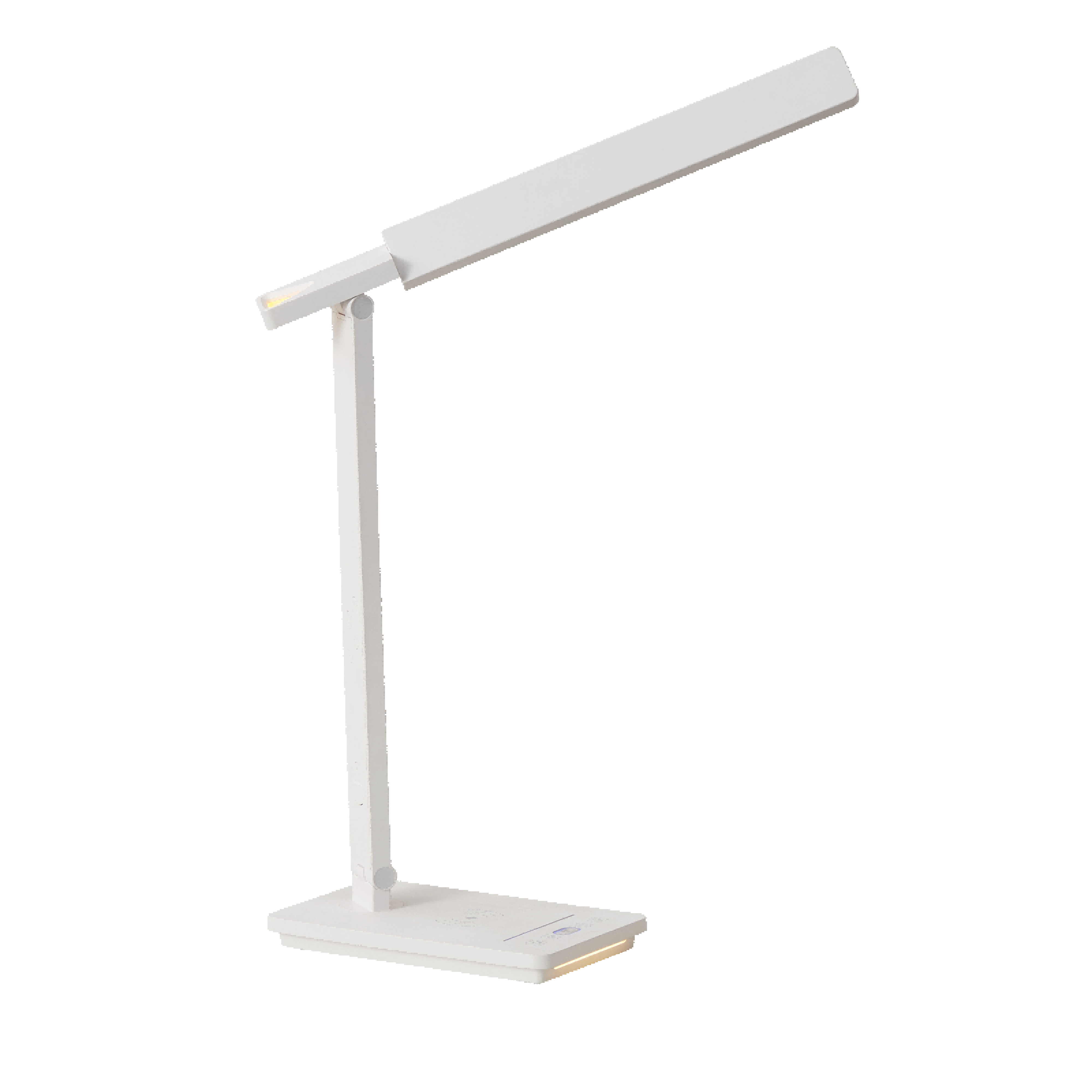
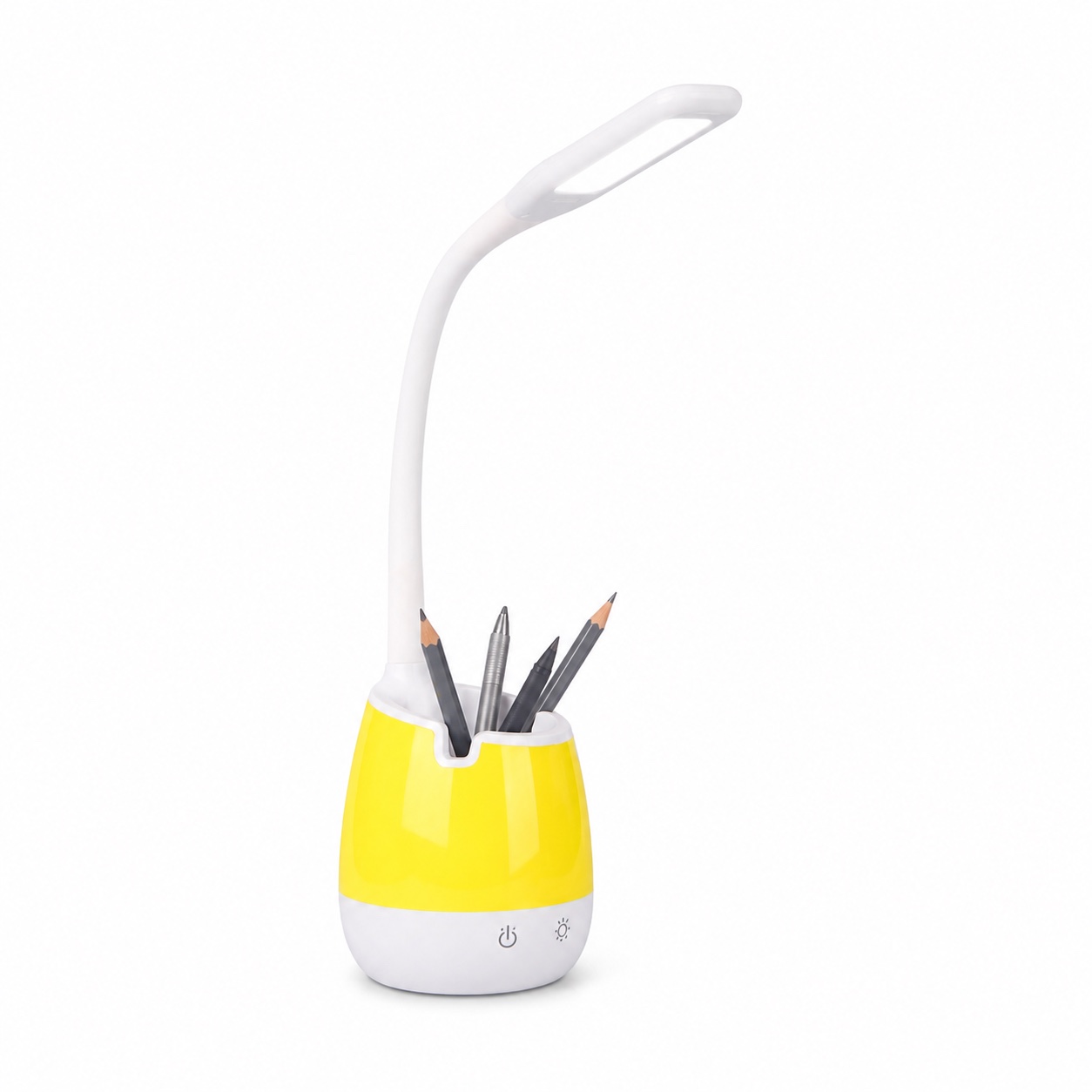
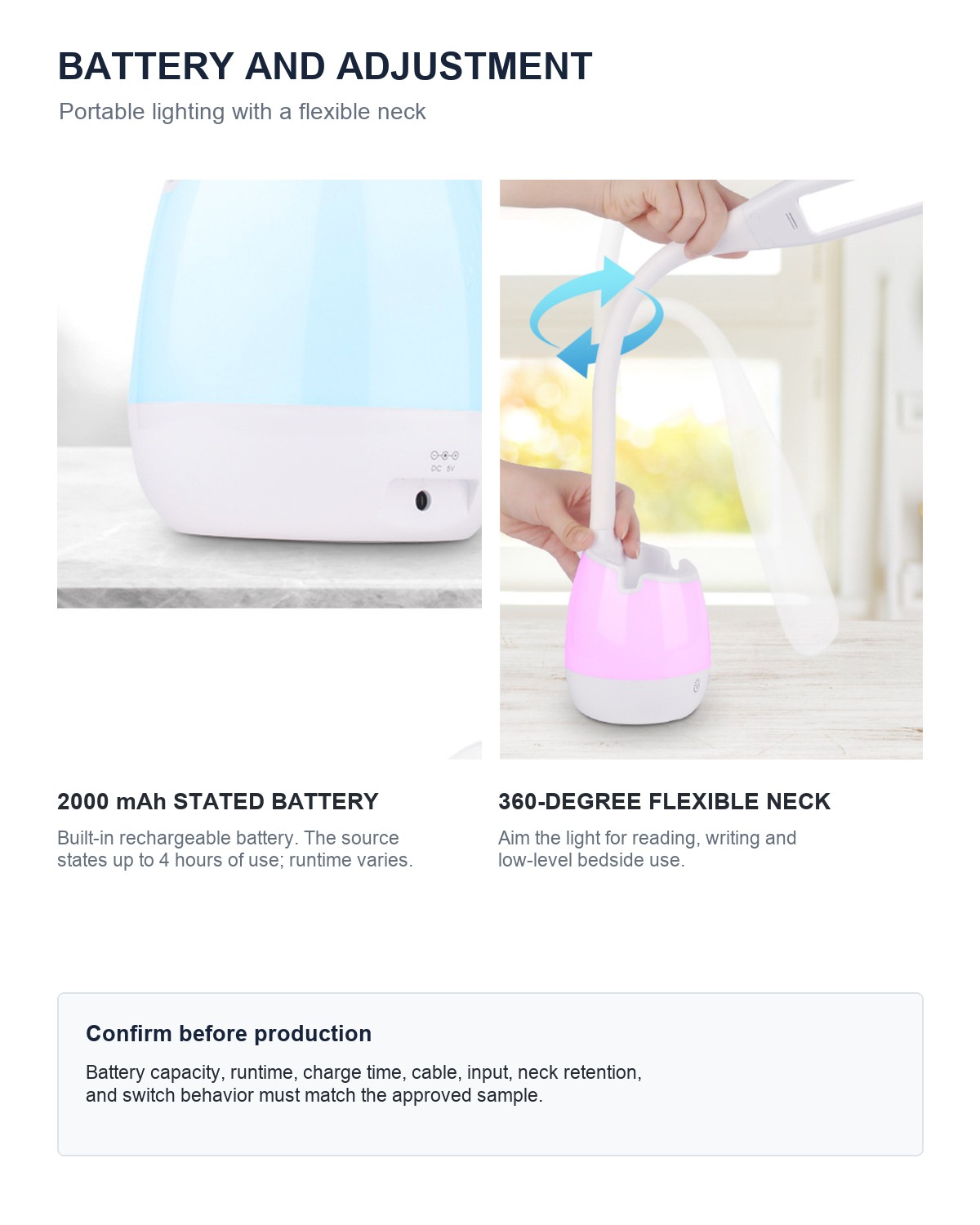
The RoyeLamp RY22 rechargeable study lamp is a useful example of why test conditions matter. Its supplied product information states a 2000 mAh battery, DC 5 V/1 A input, three brightness levels, three color temperatures, ambient base lighting, and up to four hours of use depending on operating mode. Those figures identify the configuration to assess; a buyer should still measure capacity, charge time, runtime, low-battery behavior, and simultaneous-function performance on the ordered sample.
3. Test charging behavior in the finished lamp
Cell documentation does not prove that the finished lamp charges correctly. The charging controller, connector, cable, user interface, enclosure, thermal path, and power source all affect the result. Approve the supplied cable and any adapter as part of the configuration, or state the required input and the acceptable external power source when an adapter is not included.
For normal functional evaluation, record the time from the defined low-battery point to the full-charge indication, input stability, indicator sequence, connector fit, and behavior if the lamp is used while charging. Check whether the light changes brightness, the controls reset, or charging stops when multiple functions operate together. Observe surface temperatures using an agreed method and acceptance limit established by qualified engineering and compliance teams.
Also review foreseeable user behavior: repeated connector insertion, charging from an unsuitable power source, use while folded, cable strain, and storage after long periods without use. The manual, rating label, and packaging instructions should match the tested configuration and clearly state any charging restrictions.
4. Review protection and product safety evidence
Ask the supplier to explain which protection functions exist at cell, pack, charging-circuit, and product level. The evidence should match the exact components used in production. A generic protection-board photo, an unrelated certificate, or a report for a different cell model does not establish conformity for the ordered lamp.
IEC 62133-2 covers safety requirements and tests for portable sealed secondary lithium cells and batteries under intended use and reasonably foreseeable misuse. Whether that standard, another battery standard, or additional product-level requirements apply depends on the destination, product design, battery configuration, and sales channel. Request the report scope, tested model, applicant, laboratory, edition, issue date, and any deviations—not merely a certificate cover page.
Keep product safety and transport evidence separate. A UN 38.3 test summary is important for transport, but it is not a complete finished-lamp safety approval. Likewise, a product certificate does not automatically answer packaging, marking, state-of-charge, or dangerous-goods transport questions.
5. Match the UN 38.3 summary to the actual battery
The UN Manual of Tests and Criteria provides the Section 38.3 framework for lithium-battery design testing. The U.S. Pipeline and Hazardous Materials Safety Administration explains that shippers are responsible for ensuring lithium cells and batteries offered for transportation have passed the applicable UN 38.3 design tests, and that the test summary provides traceability for the tested design.
Use the PHMSA lithium-battery test-summary guidance as a document-review aid. Check that the manufacturer and laboratory details, report reference and date, battery description, model number, watt-hour rating, performed tests, applied manual edition, and signatory are present. The model on the summary must map to the cell or battery inside the production lamp.
Do not accept “UN 38.3 available” as the entire review. Request the summary before production release, record its revision, and check it again if the cell, pack construction, protection circuit, capacity, manufacturer, or another relevant design feature changes. Ask the laboratory or dangerous-goods specialist whether the modification creates a new battery type requiring additional testing.
6. Define the 2026 air-shipping configuration before booking
Classification and packing depend on how the battery travels. A battery installed in a lamp is not the same configuration as a spare battery packed beside the lamp or a battery shipped by itself. The 2026 IATA Battery Guidance Document distinguishes lithium-ion batteries contained in equipment from batteries packed with equipment and provides current guidance on classification, packaging, marking, documentation, and state of charge.
For air transport from 1 January 2026, IATA states that lithium-ion batteries packed with equipment under PI 966 are subject to reduced state-of-charge provisions. For batteries contained in equipment under PI 967, the same document says a reduced state of charge is strongly recommended rather than mandatory under that general guidance. Exact requirements still depend on watt-hour rating, section, package count, route, State approvals, operator variations, and the current regulations.
A desk lamp buyer should therefore freeze the shipping plan before cartons are finalized:
- Is the battery installed in the lamp, packed separately with it, or shipped alone?
- What is the battery’s rated watt-hour value and exact model?
- What state of charge or indicated capacity will be used at handover?
- How will terminals, controls, and the lamp be protected from short circuit, damage, and unintentional activation?
- What inner and outer packaging, marks, labels, documents, and employee instructions apply?
- Has the airline, forwarder, and destination route been checked against the current rules?
7. Build production and pre-shipment controls
The approved battery information must flow into incoming inspection, assembly control, finished-product testing, and release records. Incoming checks can verify supplier, model, dimensions, labels or codes, open-circuit readings where appropriate, documentation status, and lot traceability. Production controls should prevent reverse connection, cable damage, insulation damage, pinching, and unapproved substitutions.
Finished-product inspection should sample charging, lighting at each required mode, indicator behavior, connector fit, abnormal noise or odor, enclosure condition, and the agreed runtime proxy or full runtime test. The inspection plan should define which tests are performed on every unit, which are sampled by lot, and which are periodic reliability or laboratory tests.
Link the battery revision to the golden sample approval record. Before shipment, use the LED desk lamp pre-shipment inspection checklist to confirm that the produced lot, cable, labels, packaging, and documents still match that approved configuration.
8. Copy this battery section into your RFQ
| RFQ item | Buyer entry | Supplier confirmation |
|---|---|---|
| Battery configuration | Chemistry, nominal voltage, capacity, Wh, cell/pack format, installed or removable. | Maker, model, construction, dimensions, connector, and no-substitution rule. |
| Charging system | Input, connector, cable/adapter, operation while charging, indicator behavior. | Charge time, control circuit, protection, and approved power source. |
| Runtime claim | Required modes, test conditions, endpoint, number of samples, acceptance range. | Test record for the quoted sample and claim wording. |
| Safety evidence | Destination, sales channel, required standards, report language, validity checks. | Exact model reports and declarations; scope and revision identified. |
| Transport | Mode, route, installed/packed/alone configuration, package quantity, target ship date. | UN 38.3 summary, classification, SoC plan, packaging, marks, labels, and forwarder review. |
| Mass-production control | Traceability, change approval, incoming check, functional test, inspection sampling. | Lot coding, records, approved sample, and corrective-action process. |
Frequently asked questions
Does a 2000 mAh battery guarantee four hours of runtime?
No. Runtime depends on nominal voltage, lamp power, selected modes, conversion losses, cut-off behavior, battery condition, and the test endpoint. Approve a measured runtime under named conditions.
Is a UN 38.3 test summary the same as a full test report?
No. It is a standardized summary that identifies the tested design and key information. Buyers should check its traceability and obtain further evidence when required by their compliance or transport process.
Can the same document cover any replacement cell?
Do not assume so. The evidence must map to the actual cell or battery design, and a meaningful change may require reassessment or new testing. Make substitutions subject to written approval.
Should a buyer fully discharge every production sample?
Usually, production control combines fast functional checks with sampled or periodic longer tests. Define the plan with the supplier and qualified engineers so it detects drift without confusing a quick line check with a complete runtime or safety evaluation.
Who should confirm air-shipping requirements?
Use a trained dangerous-goods professional, the nominated freight forwarder, and the applicable airline or operator information. Regulations and operator variations change, so recheck them for the actual shipment date and route.
References
- IATA Guidance Document for Lithium Batteries and Sodium Ion Batteries — 2026.
- PHMSA: Lithium Battery Test Summaries.
- UNECE: UN Manual of Tests and Criteria, Revision 8.
- IEC 62133-2:2017 — Safety requirements for portable sealed secondary lithium cells and batteries.
Prepare a rechargeable lamp RFQ
Send RoyeLamp your target market, quantity, runtime requirement, charging input, branding, packaging, and transport route. We can identify a catalogue starting point and prepare the requested sample and document list for review.
