

Two desk lamps can both advertise “50,000 hours” while offering very different evidence. One supplier may provide a traceable LED light-output projection. Another may repeat a number from a component brochure. Neither number, by itself, tells an importer how long the adapter, controls, charging system or complete lamp will remain usable.
Before comparing lifetime hours, identify what is being rated, which end point defines the rating, and what conditions and evidence support it. Keep LED lumen maintenance, complete-product reliability and warranty coverage as three separate questions.
This guide helps wholesale buyers review lifetime claims before approving a specification, retail box or product listing. It does not assign a service-life rating to any RoyeLamp model. The checklists are suggested purchasing controls; a qualified technical reviewer should assess the actual reports.
1. Ask what “50,000 hours” actually describes
A useful lifetime statement names the item being evaluated and the condition that ends its rated life. Is the claim about declining LED light output, the survival of an electronic assembly, or the usable performance of a complete desk lamp? Do not allow these meanings to change between the quotation and the packaging artwork.
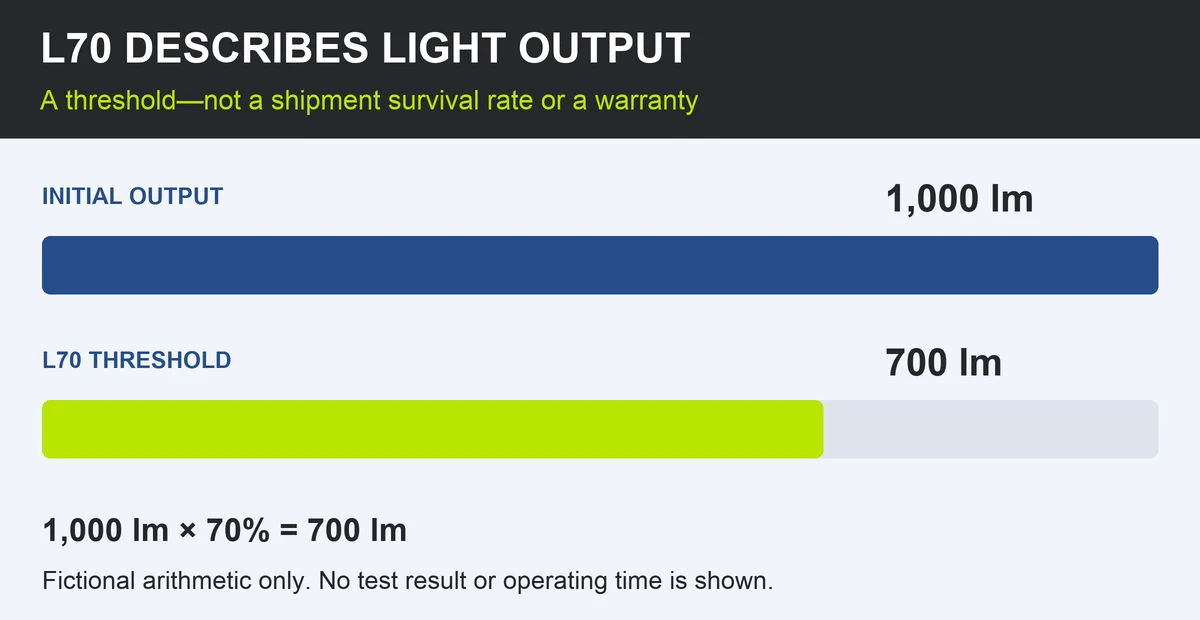
L70 refers to a light-output maintenance threshold: 70% of the initial luminous flux. It is not a statement that 70% of a shipment will survive, and it does not say that every lamp switches off at the stated hour. Ask what the reported statistic represents and whether the claimed time is measured or projected.

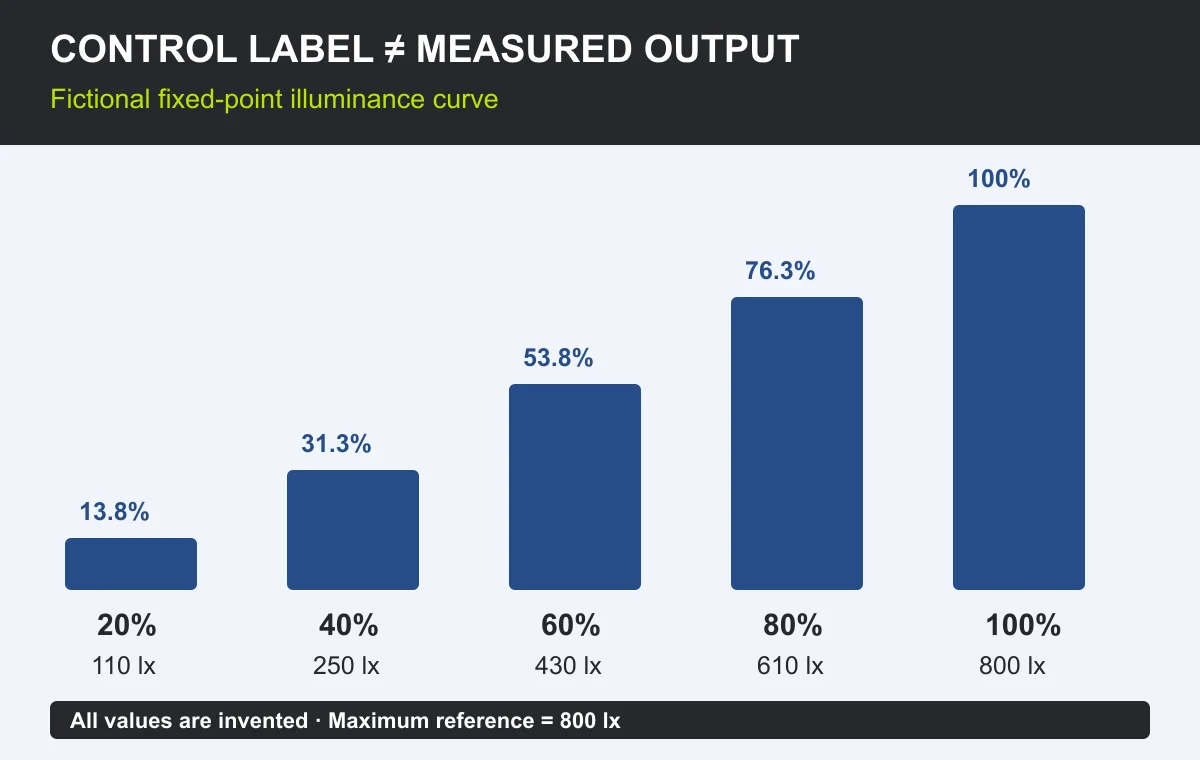
Nor is 70% automatically an acceptable level for every task. Define the useful lighting requirement for your application separately. A lumen-maintenance figure does not establish the illuminance across a particular desk; lamp position and light distribution also matter. Use the desk-lamp coverage guide to define that purchasing requirement.
Dividing 50,000 by eight hours per day and 365 days gives about 17.1 years. That is an operating-hours conversion, not evidence that a complete lamp will work for 17 years. It does not add information about failures, changing use conditions or warranty coverage.
2. Know what LM-80 and TM-21 contribute
ANSI/IES LM-80-21 describes controlled measurements of output and colour maintenance for LED packages, arrays and modules. An LM-80 report concerns the identified light sources under its test conditions. It is not a whole-desk-lamp lifetime certificate.
ANSI/IES TM-21-21 provides a method for projecting source flux maintenance using LM-80 data. A projection extends the interpretation of measured data; it is not evidence that the product has physically operated for every hour shown in the projection.
Ask for the test duration, sample information, temperature and drive conditions, calculation inputs, method edition and permitted reporting limit. Request both the measured record and the reported projection. A spreadsheet that produces a very large number is not sufficient if that number exceeds the method’s allowed reporting range.
The IES position on LED product lifetime prediction, issued in 2018, specifically warns against treating LED-component projections as the lifetime of an entire luminaire. It also addresses excessive extrapolation. For a current report, have the reviewer apply the stated method edition and its reporting rules rather than transferring a simplified rule from an older article.
Edition note: the linked LM-80 and TM-21 pages describe published 2021 editions. IES lists an LM-80 revision for public review in September 2026; a draft is not a published replacement. Confirm the appropriate edition and applicable amendments when commissioning or accepting a report.
What about measurements on the complete lamp?
IES LM-84 addresses optical-output and spectral maintenance of LED lamps, light engines and luminaires over time. Its scope is closer to the assembled lighting product, but optical maintenance still does not establish hinge durability, touch-control reliability or a warranty entitlement.
Ask which product-level and subsystem evidence addresses the rest of the ordered design. The older DOE/Next Generation Lighting Industry Alliance lifetime guide remains useful background on system reliability and buyer due diligence; its 2014 recommendations should not be treated as current product specifications or a mandatory test plan.

3. Connect the report to the lamp you will receive
A genuine report can still be irrelevant to the order. Start by matching the LED manufacturer and exact part or covered family to the supplier’s controlled production record. “Same LED brand” is insufficient. If a report covers a family, ask for the documented basis on which the installed device is included.
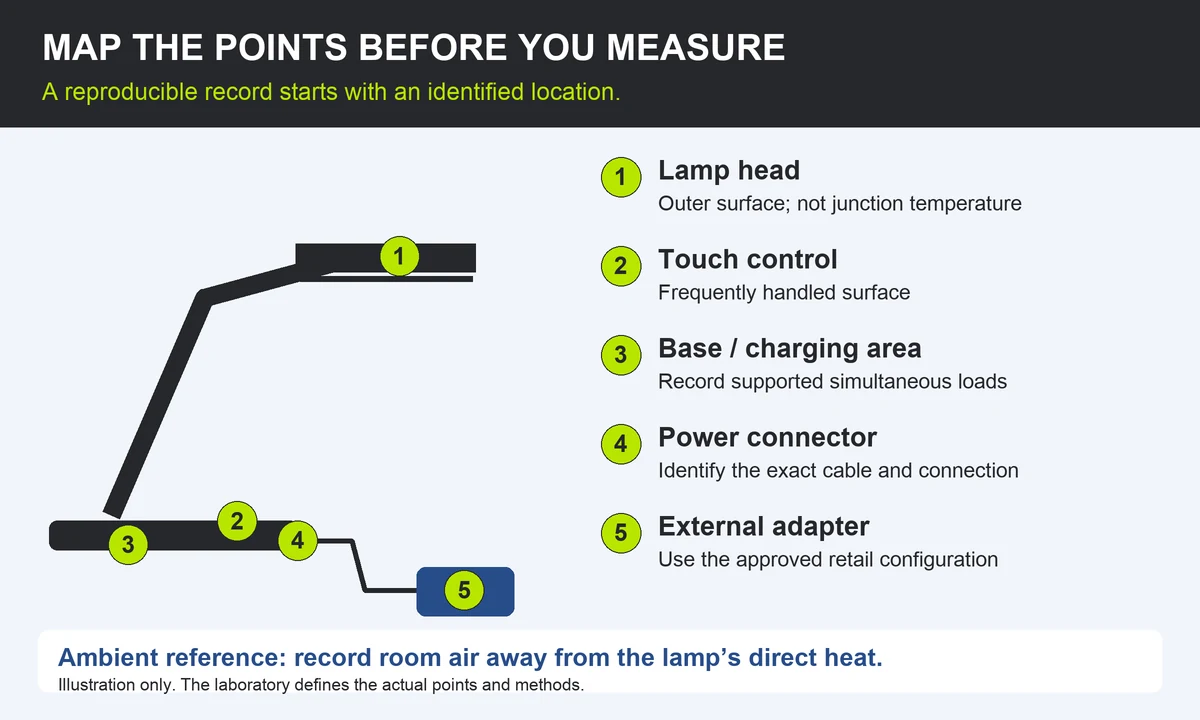
Then review how the actual lamp operates the source. Temperature and drive current influence source maintenance, as the TM-21 scope explains. Request the engineering link between the report’s conditions and the assembled lamp’s relevant operating modes. Do not substitute a measurement of the outer cover for the specified LED-source temperature point.
For tunable-white lamps, ask how the evidence covers the installed channels and their drive conditions. For lamps that support lighting and charging together, ask whether that use changes the operating conditions used in the assessment. The thermal testing guide helps define configuration and measurement records; passing a temperature check does not create a lifetime rating.
On a small screen, scroll the table horizontally.
| Review item | Evidence to request | Reason to pause |
|---|---|---|
| Source identity | Installed LED reference and its connection to the report’s tested or covered devices | Only a brand name, unrelated model or unidentified report extract |
| Conditions | Relevant drive setting and source-temperature assessment for the ordered assembly | Temperature location is unclear, or a different lamp/power kit was assessed without justification |
| Measured versus projected | Test duration, source data, calculation record and allowed reporting limit | A long projected duration is described as completed testing |
| Product scope | Evidence covering the claimed whole-product functions and identified failure criteria | One LED-source result is used to support every feature of the desk lamp |
| Production relevance | Approved revision and a documented review when relevant parts or operating conditions change | The report cannot be connected to current production |
Missing information is a gap to resolve, not automatic proof that a product is poor. Give the supplier a precise request and a decision date. If the necessary connection cannot be established, do not promote that report into evidence for a stronger claim.
4. Compare evidence quality before comparing the hours
Consider these fictional supplier submissions. The example illustrates a review decision; neither row describes a RoyeLamp product, customer or actual test.
| Submission | What the buyer receives | Reasonable next step |
|---|---|---|
| A: “50,000-hour lamp life” | A component brochure with no identified report, operating-condition link or whole-product assessment | Hold the lifetime claim. Request its definition and supporting evidence; do not rank A higher solely for the larger number. |
| B: “30,000-hour projected source L70” | Identified source report, projection record, application-condition assessment and separately stated service terms | Have the technical reviewer validate the records and scope. B is more reviewable, but this does not prove the complete lamp will outlast A. |
Do not use the difference between these two numbers as an automatic maintenance saving. First make the definitions and operating assumptions comparable. A cost model that assumes no replacements simply because an LED projection extends beyond the planning period has assumed away the risk it should be evaluating.
Where reliable field data exist, request the product revision, population size, time in service, operating pattern, failure definition and reporting method. “Only a few returns” has little meaning without the number shipped and how long those units have been observed. A newly introduced revision should not inherit another revision’s field record without an explanation.
5. Approve the claim, the product and the warranty separately
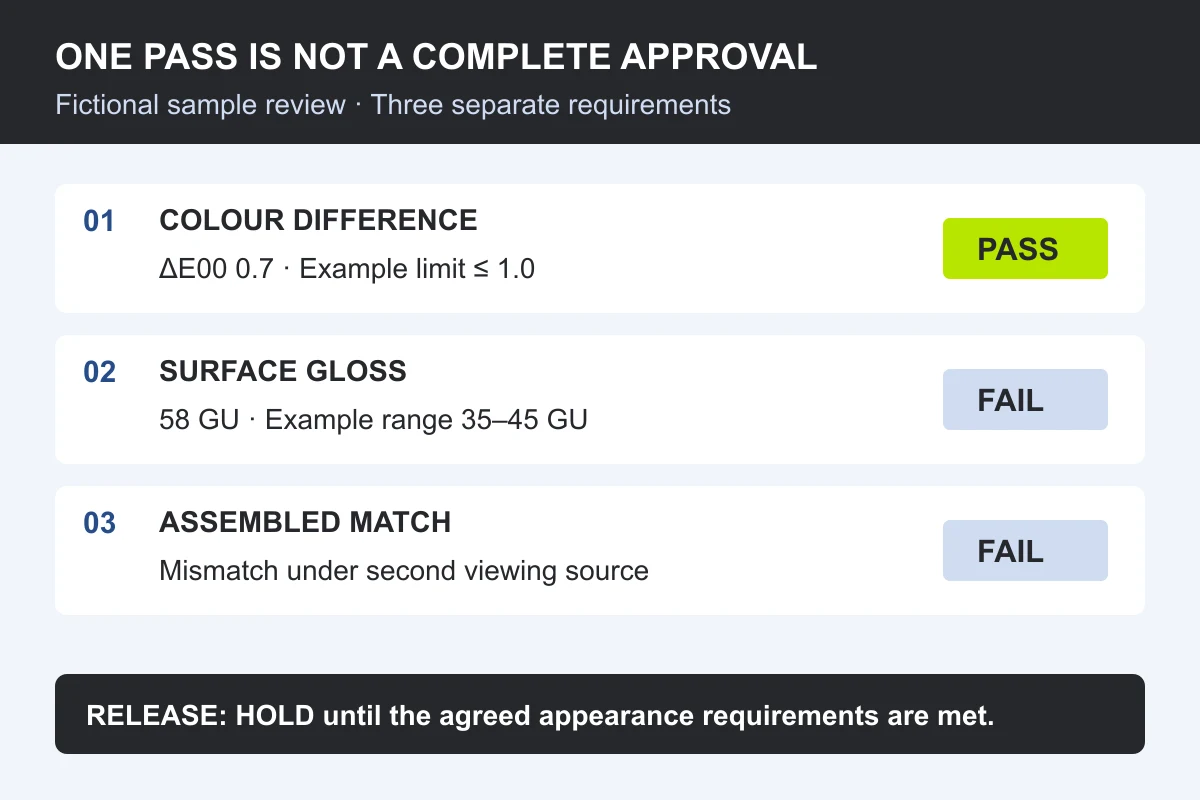
Make three recorded decisions before final artwork approval: whether the evidence supports the proposed wording, whether the complete product meets the purchasing specification, and whether the service terms fit your business. These decisions can have different outcomes.
For example, a buyer may accept a lamp for a defined application while declining to print an unsupported lifetime figure. Alternatively, sound source-maintenance evidence may support a narrowly worded technical statement while leaving the whole-product reliability review open. Do not make a short footnote carry the burden of correcting a broad headline.
Keep warranty coverage concrete
A warranty is a written commitment with conditions and remedies, not a measurement of how long every unit will operate. Review when coverage begins, any operating-hour limit, covered assemblies, exclusions, claim evidence, replacement or repair route, and responsibility for transport and handling. A rechargeable model also needs clear treatment of battery capacity loss.
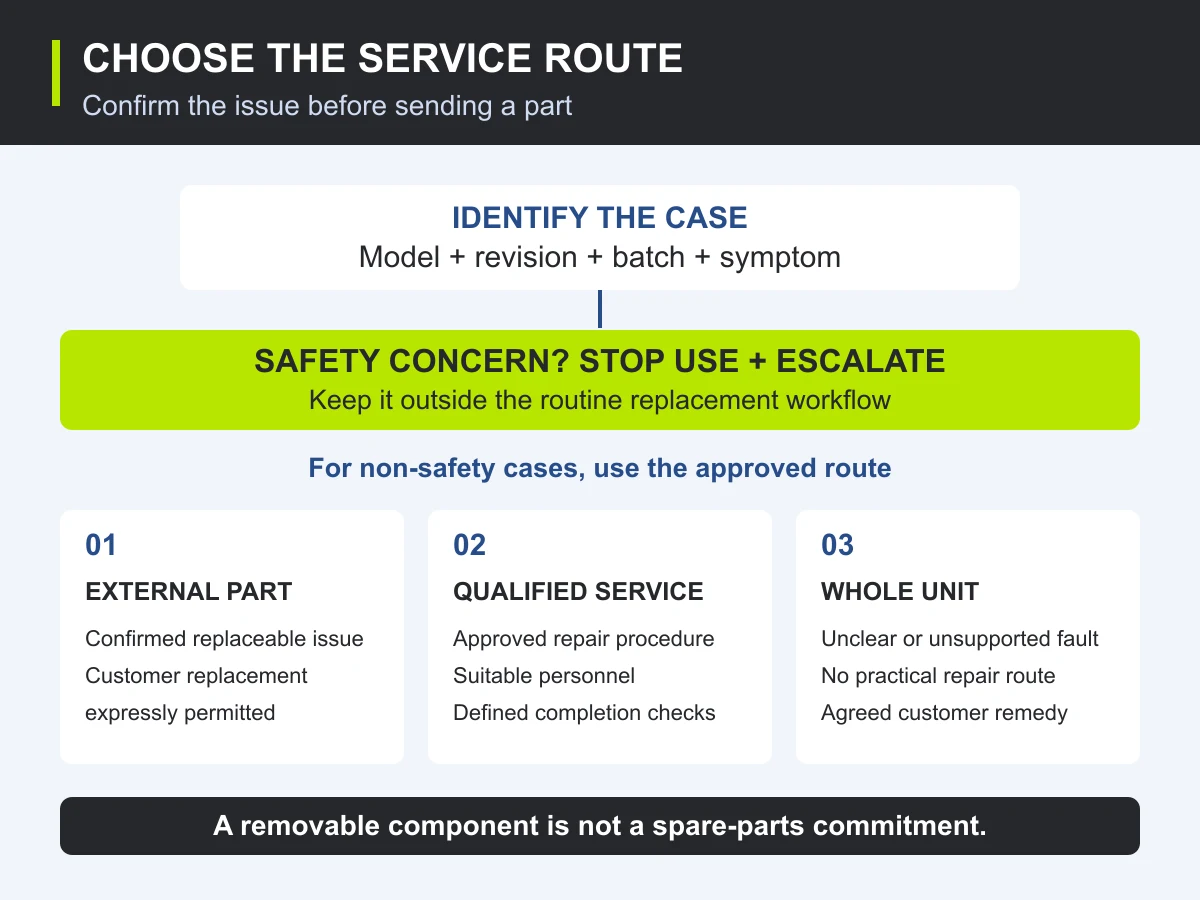
Check whether the proposed support route is practical for your customer. The spare-parts planning guide covers compatibility and fulfilment questions. Do not advertise a service commitment longer or broader than the arrangement you can actually support.
Use a release decision that matches the evidence
- Supported within a defined scope: retain the approved wording, report references, conditions and product revision together.
- Incomplete: hold the claim or revise it while missing evidence is obtained. Do not label incomplete evidence as a passed review.
- Not substantiated: remove the proposed statement; reassess the product separately against the purchasing requirements.
Copy-ready request for your supplier
Please define the proposed lifetime statement for model/configuration [reference]: rated item, end point, operating conditions, measured duration and any projected duration. Provide the applicable LM-80/source report and projection record where used, identify the installed LED and the link to its operating conditions, and state the calculation method, edition and reporting limit. List separate evidence for the complete product and identify what remains unverified. Confirm the approved production revision and the written warranty coverage, exclusions and service route. Do not treat an LED-source projection as a whole-lamp or warranty claim.
Questions buyers often ask
Is a 50,000-hour claim automatically false?
No. The question is whether the evidence supports that number for the stated item, end point and conditions. A valid, limited source projection and an unsupported whole-lamp promise can use the same number.
Does a 24-hour burn-in verify the advertised lifetime?
No. A short production screen can document behaviour during its test period and may reveal some defects. It does not, by itself, establish tens of thousands of operating hours. Ask what the screen is intended to detect.
Should buyers always choose the highest L70 figure?
No. Compare like-for-like evidence, useful lighting performance, complete-product quality and service arrangements. A larger figure with unclear scope is less useful than a well-supported statement you can interpret.
Review the evidence before approving the lifetime claim
Send RoyeLamp your selected model, expected operating pattern, target market and proposed product claims. Ask which model-specific records and service terms can be supplied for review, and identify any evidence gaps before finalizing the order.
Sources establish method scope and reliability principles, not a lifetime rating for RoyeLamp products. Public standard descriptions are not substitutes for the full methods. All numerical illustrations and supplier comparisons here are fictional. The IES public-review listing was checked on September 18, 2026.
