

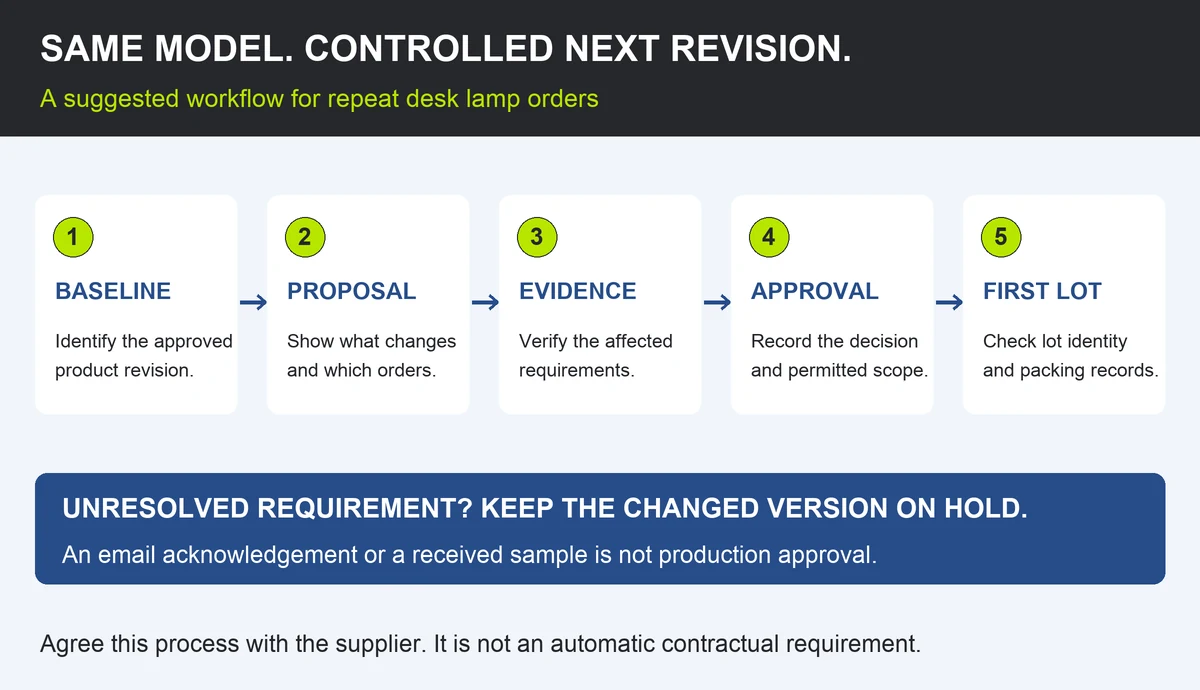
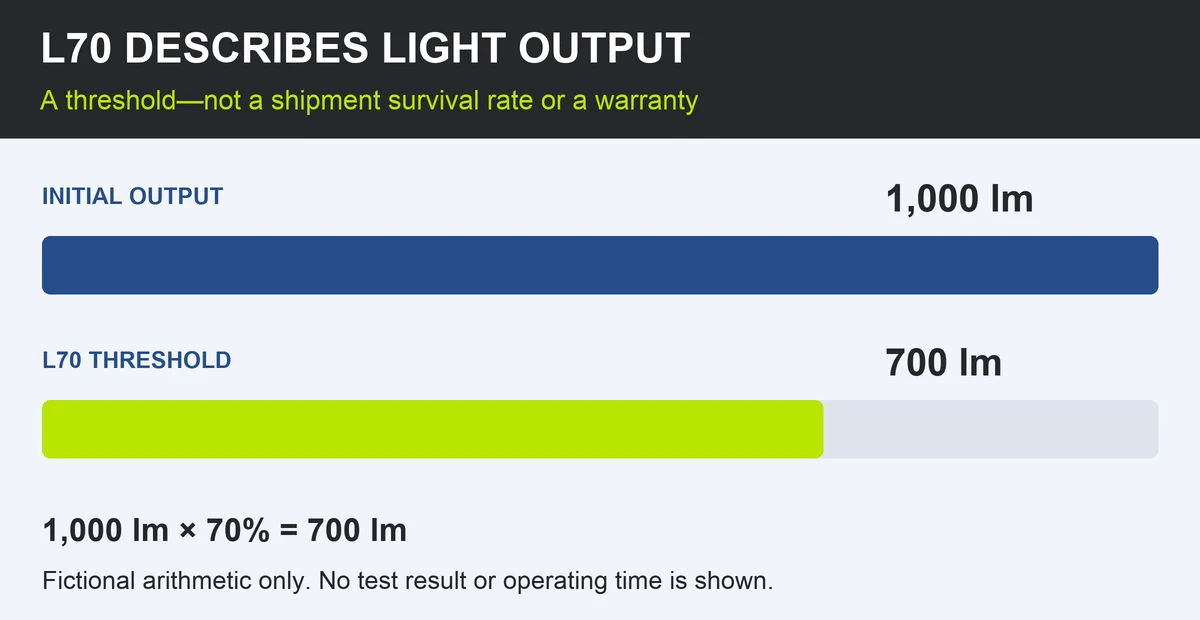
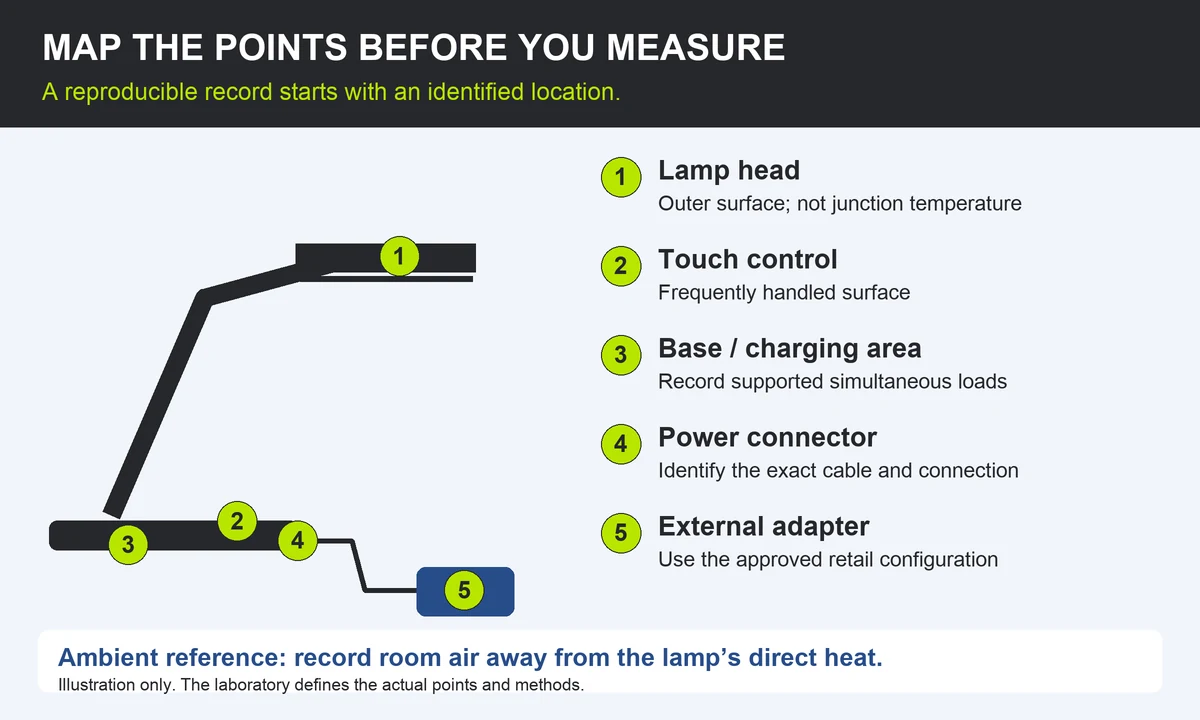
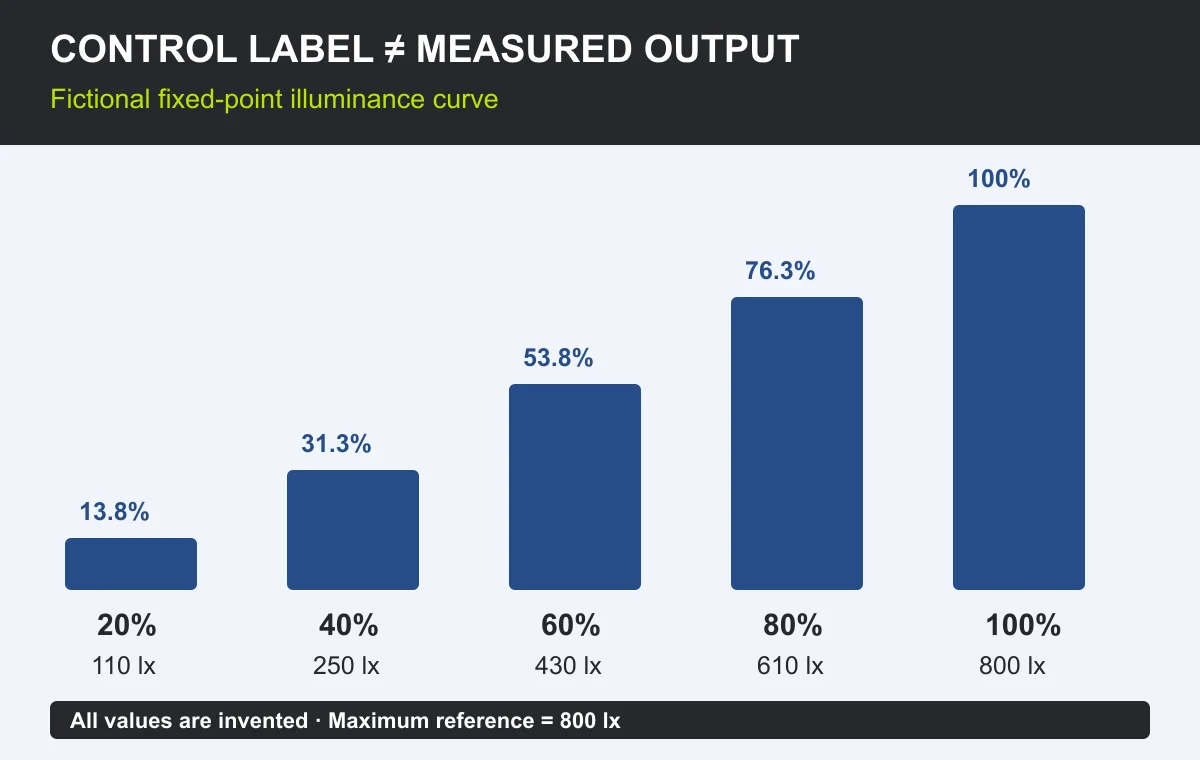
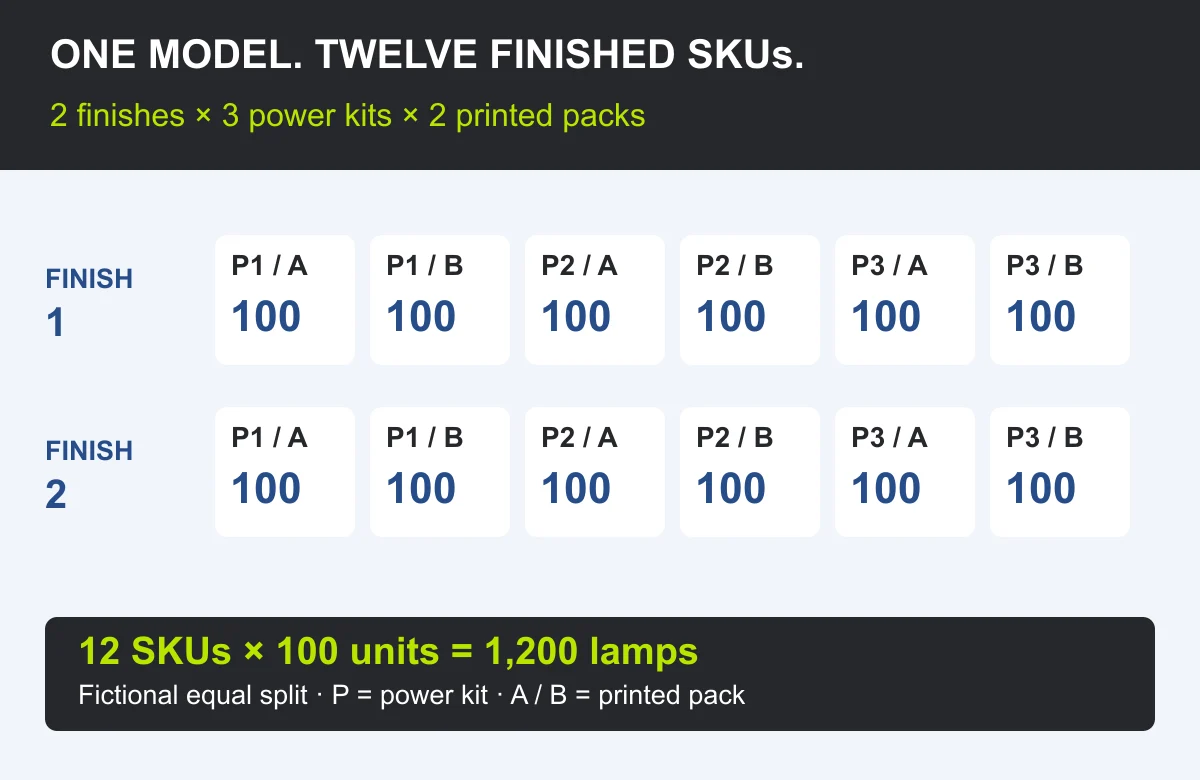
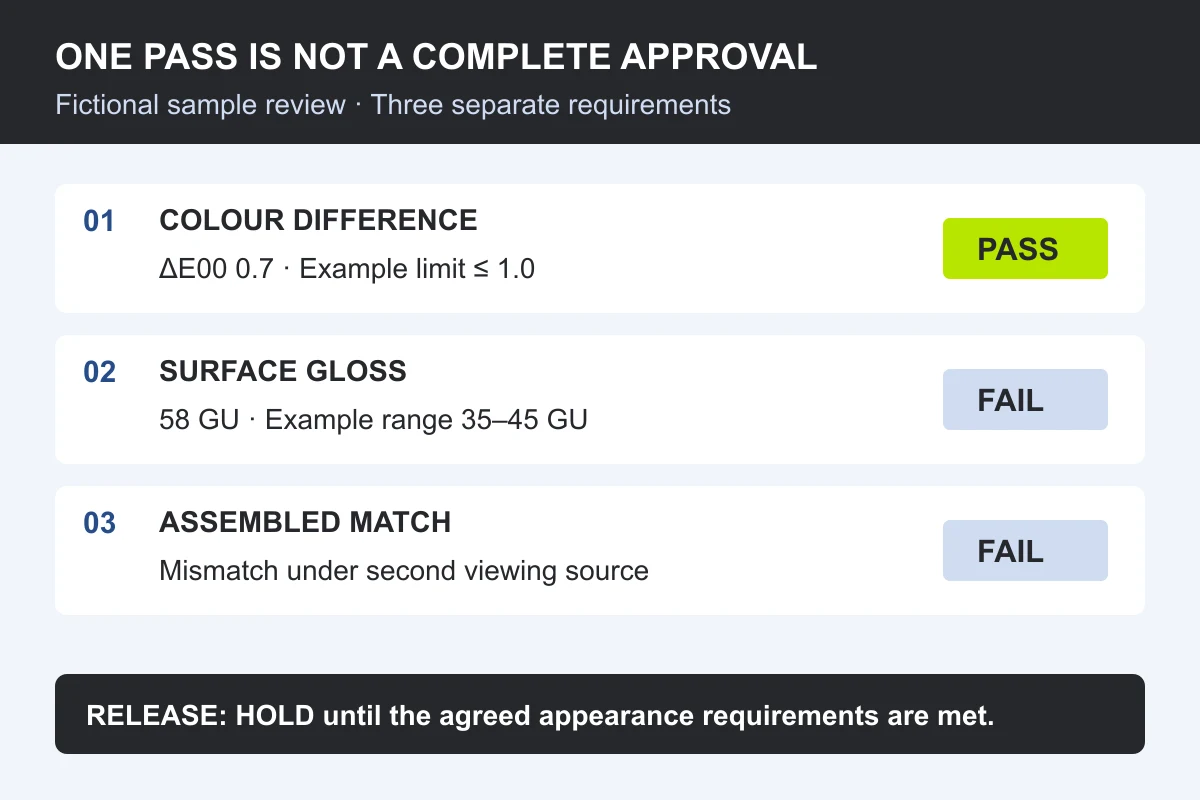
Comparing LED desk lamp specifications looks straightforward until two suppliers use the same words to mean different things. One quotation says “10W eye-care lamp,” another says “500 lumens,” a third promises “wireless charging and no flicker,” and the cheapest one includes almost no test data. If the buyer compares these lines as equal, the purchase decision becomes a gamble. The cost usually appears later as weak reviews, high returns, failed inspections, or a product that cannot support the promised retail price.
In our experience, specifications should be treated as evidence, not decoration. A useful spec sheet helps a wholesaler or OEM brand owner predict performance in the market. A weak spec sheet simply repeats attractive claims. The goal is not to make every supplier use identical wording; it is to normalize the important variables so the buyer can see the real trade-offs behind price.
Normalize the Basic Product Definition First
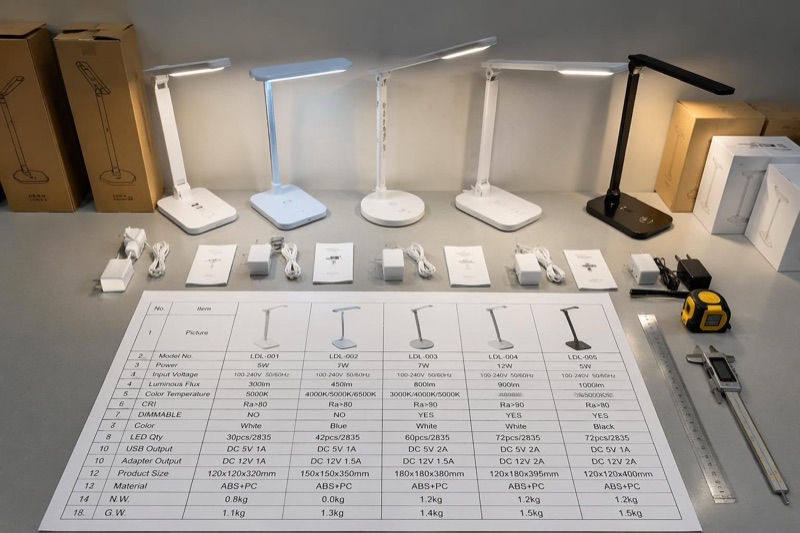
Before comparing electrical or optical data, make sure each supplier is quoting the same product configuration. A desk lamp can change cost significantly based on adapter inclusion, plug type, wireless charging module, LED quantity, arm material, base weight, cable length, packaging structure, and printed materials. If one supplier includes a certified adapter and another quotes lamp body only, the price comparison is already invalid.
Create a comparison sheet with fixed fields: lamp type, dimensions, material, weight, LED power, adapter rating, included accessories, control method, color temperature settings, dimming method, charging functions, packaging size, carton quantity, certifications, sample lead time, bulk lead time, and warranty assumptions. Add a column for “evidence received.” This is where many weak quotations become obvious. A supplier may claim CE and RoHS, but if the technical file, labels, and material declarations are not aligned, the importer still carries risk [1][2].
The mistake buyers make is comparing headline wattage and unit price while ignoring what is inside the quotation. A slightly higher price may include better packaging, heavier base stability, a safer adapter, or actual compliance support. A lower price may simply remove those costs and leave the buyer to solve them after order confirmation.
Separate Optical Performance from Marketing Claims
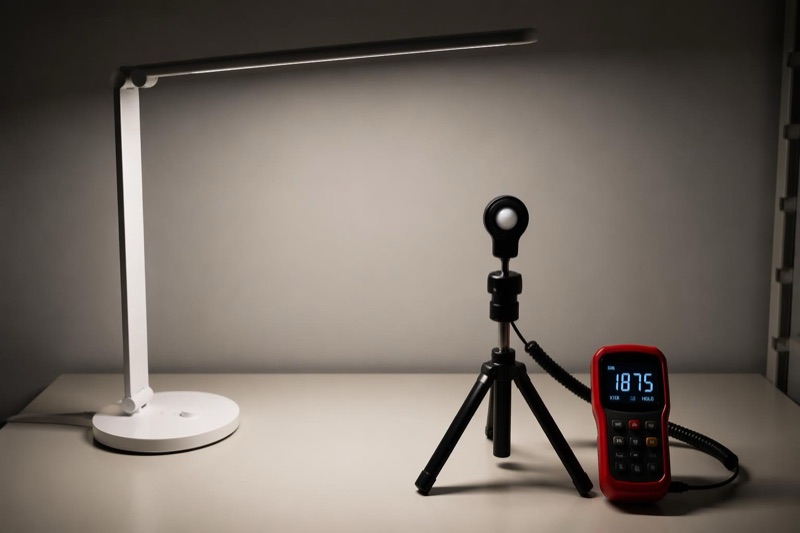
Lighting specifications are often where suppliers become least precise. “Eye-care,” “soft light,” and “no flicker” are not enough. Buyers should request measurable details: wattage, lumen output, color temperature range, color rendering index, illuminance at a defined distance, dimming levels, diffuser type, beam distribution, and flicker test method. A lamp can have high lumens and still be uncomfortable if glare is poorly controlled or the light distribution is uneven.
Ask each supplier to provide test conditions. Was illuminance measured at 30 cm or 50 cm? Was the lamp at maximum brightness? What area of the desk was measured? Is CRI typical or guaranteed? Does color temperature shift between dimming levels? Without the test context, the numbers can mislead the buyer. Lighting standards exist because performance depends on both the light source and the luminaire design [3].
Read Power, Charging, and Connectivity Specs as Risk Signals
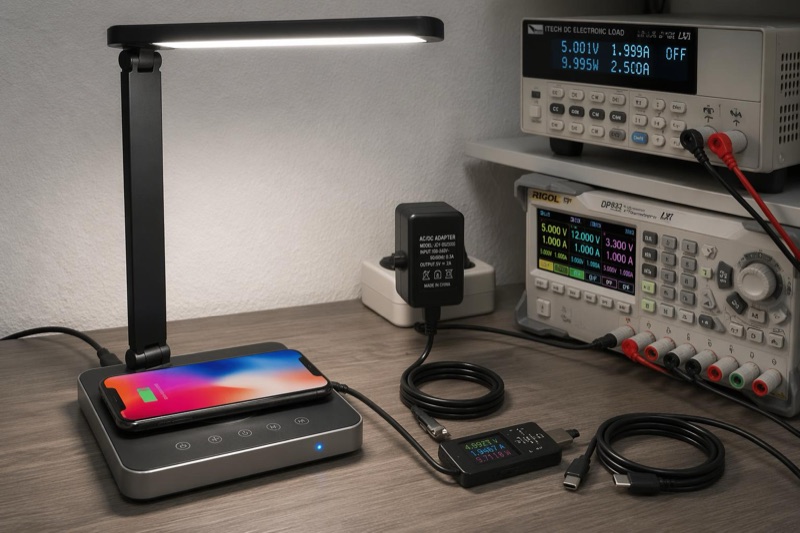
Power specifications deserve close attention because they reveal both product capability and supplier discipline. For a standard LED desk lamp, compare input voltage, adapter output, driver type, protection features, and cable quality. For wireless charging lamps, compare charging power, Qi compatibility, coil position, foreign object detection, heat control, and phone case tolerance. The Wireless Power Consortium’s Qi ecosystem exists to improve interoperability; buyers should not accept vague “wireless charger” language when compatibility is central to the selling point [4].
For smart multifunctional lamps, check clock accuracy, memory function, backup battery, display brightness, Bluetooth or Wi-Fi module details if included, and app dependency. If a supplier mentions Wi-Fi, clarify the protocol and regional support. IEEE 802.11 standards are widely used, but implementation quality, antenna placement, and regulatory documentation still matter [5]. A connected lamp that is difficult to pair can create returns even when the LED function works perfectly.
The buyer’s risk signal is inconsistency. If the supplier can explain the mechanical design but cannot explain the adapter, driver, or charging module, the project may depend on low-cost outsourced electronics. That does not automatically mean the product is bad, but it means the buyer should require stronger sample testing and clearer responsibility before bulk production.
Compare Compliance Documents, Not Just Certification Logos
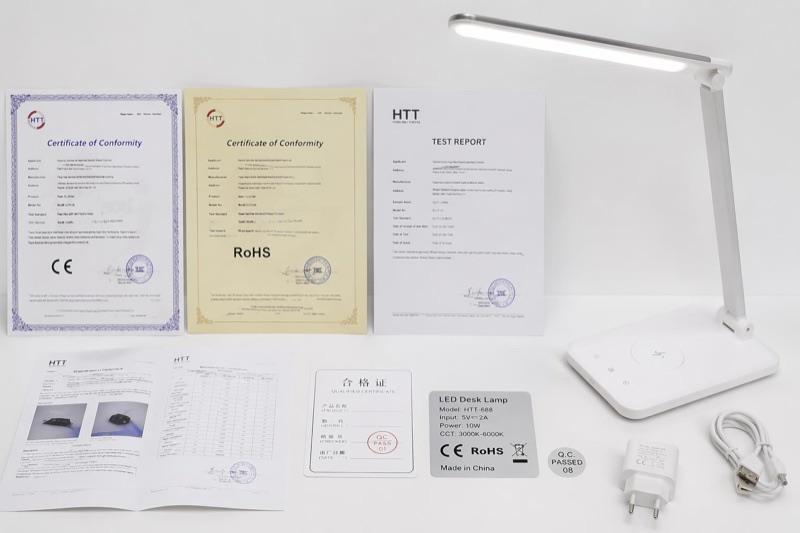
Certification logos on a quotation are not proof. Buyers should request the certificate holder name, model number coverage, test report number, issue date, applicable standard, and product photos in the report. The lamp you order must match the product described in the documents. If the report covers a different adapter, different LED board, or older housing, it may not protect your shipment.
For EU sales, CE marking is a manufacturer responsibility that involves conformity assessment, technical documentation, declaration of conformity, and correct marking [1]. RoHS requires restriction of specified hazardous substances in electrical and electronic equipment [2]. For portable luminaires in other markets, standards such as UL 153 may be relevant depending on the selling channel and compliance plan [6]. Importers should not wait until the forwarder asks for documents. By then, redesign is expensive and shipment timing is already under pressure.
A practical comparison table should grade documents as “received and matching,” “received but mismatch,” “sample only,” or “not received.” This approach prevents a common sourcing failure: choosing the cheapest supplier based on a claimed logo, then discovering that the documents cannot support the exact configuration ordered.
Use Samples to Confirm the Spec Sheet
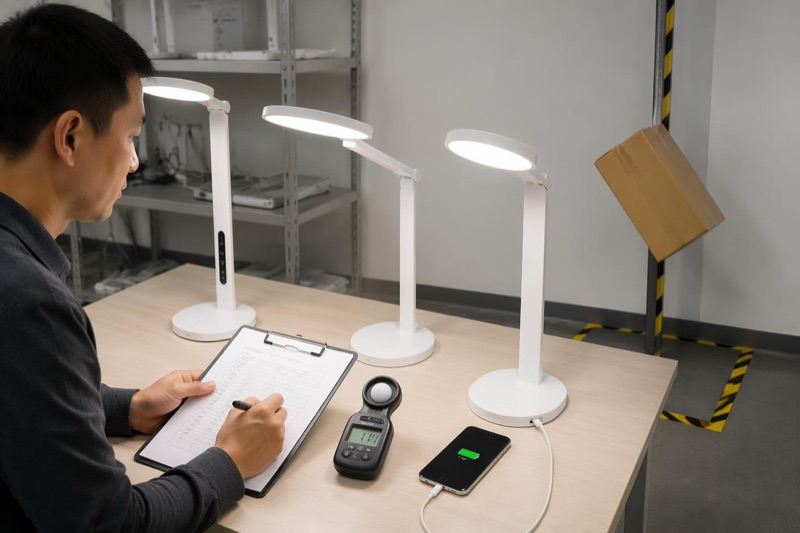
The final comparison must happen with physical samples. A specification sheet is a promise; the sample shows how the promise feels. We often see buyers approve a lamp because the sample looks good in photos, but they fail to test repeated adjustment, long operation, packaging protection, or phone charging under realistic conditions. These gaps become mass-production complaints.
Build a sample checklist that mirrors the specification table. Measure brightness at the same distance. Run the lamp for several hours. Test all dimming levels. Charge multiple phone models. Check adapter temperature. Adjust the arm repeatedly. Inspect screw tightness and plastic fit. Drop-test the color box and master carton if packaging damage would hurt your channel. For OEM projects, check logo durability and barcode accuracy.
