

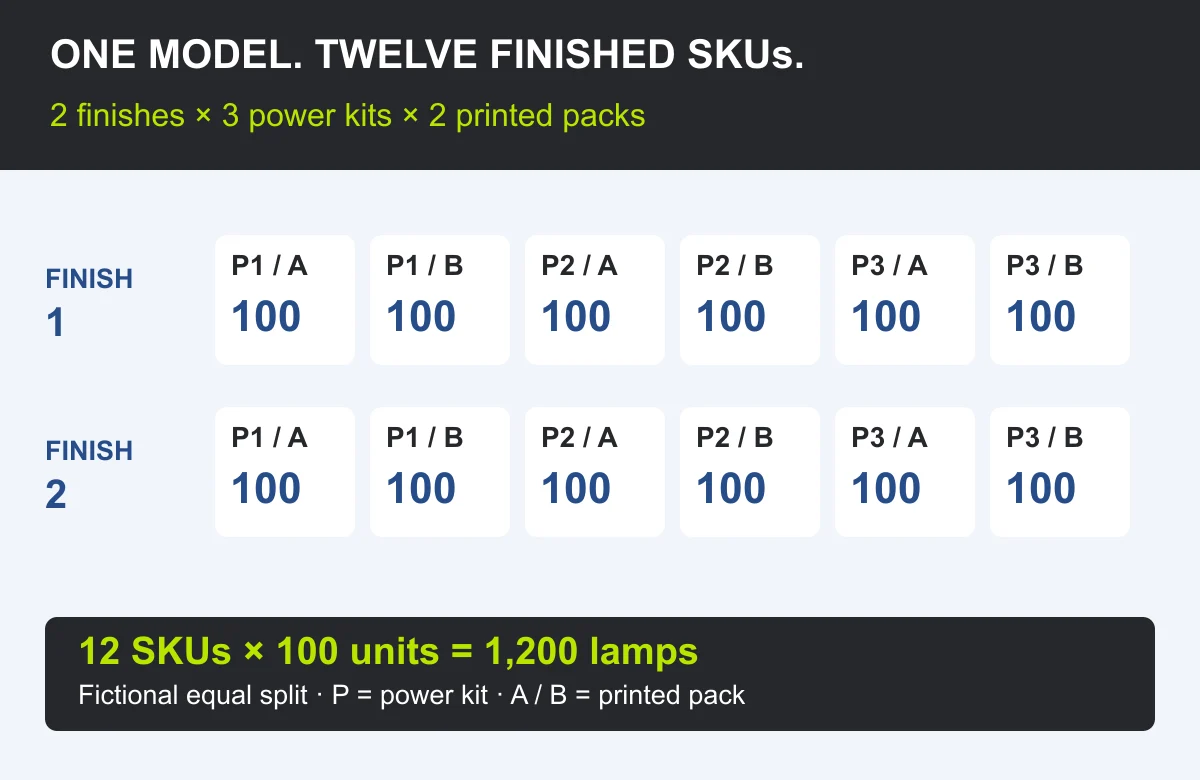
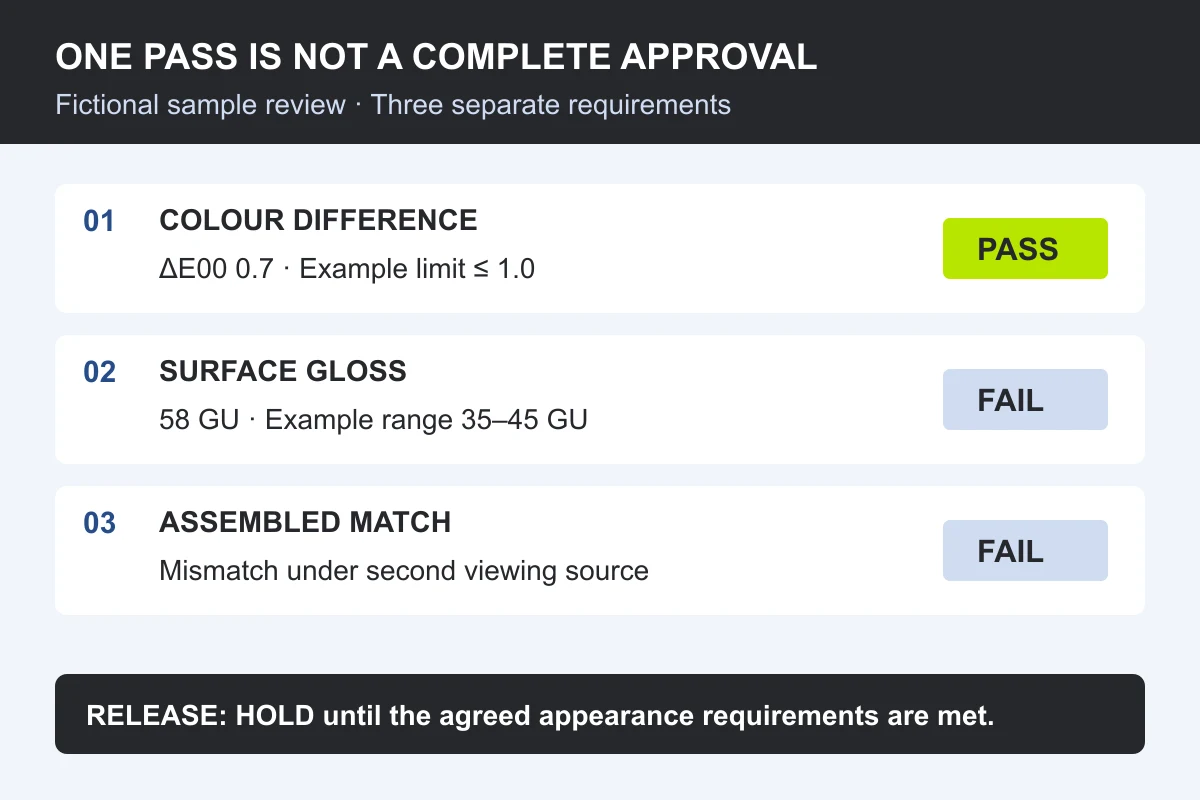
The second order can carry a different risk from the first: the lamp still has the same model name, but something inside has changed. An adapter becomes unavailable, a control board is revised, or a packaging supplier proposes a substitute. “Same specification” is not enough to tell a buyer whether the next shipment will behave like the one already selling.
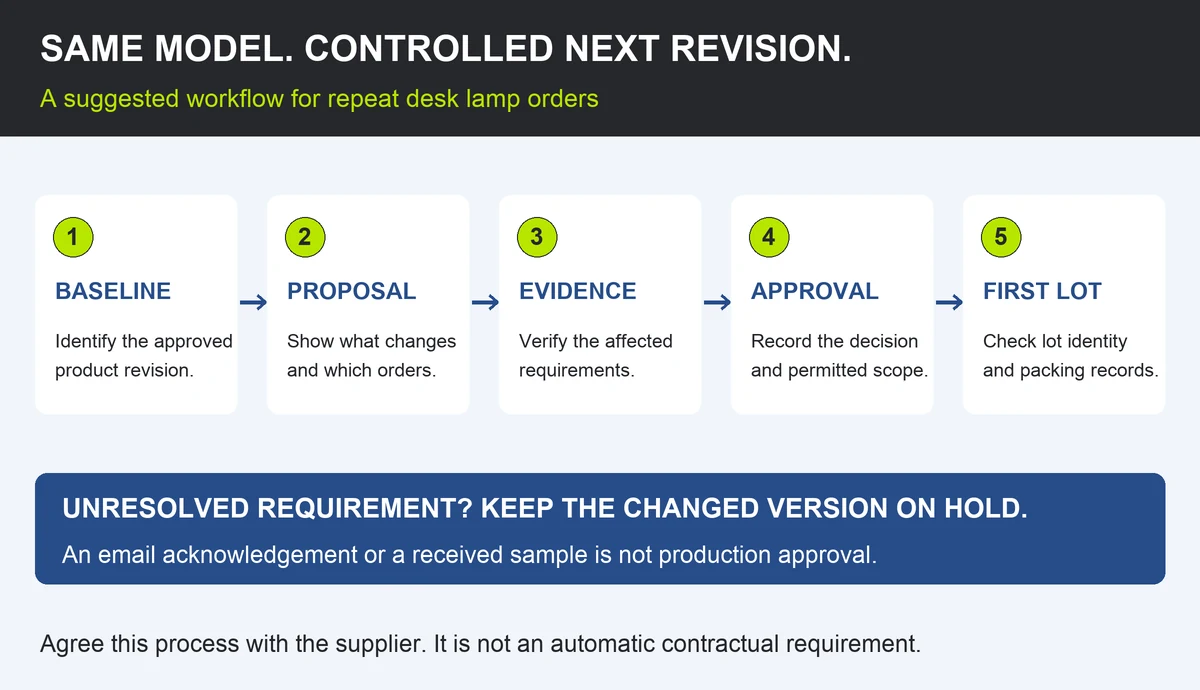
Link every reorder to an approved product revision. If a controlled item changes, require an identified proposal, evidence for the affected requirements, and a written decision before the changed configuration enters your order. Then identify exactly where the old version ends and the new one begins.
This guide is for importers, distributors and private-label brands managing repeat LED desk lamp orders. It focuses on the transition between approved versions—not the initial golden-sample approval or a general inspection checklist. The workflow below is a suggested purchasing control to agree with your supplier, not a claim that every RoyeLamp project already includes it.
1. Replace “same as last order” with a revision reference
A purchase order that repeats only the commercial model and colour leaves too much unstated. Attach a short configuration record with a revision, approval date and the relevant specification and artwork references. The factory should be able to connect it to its controlled production documents.
Record the lamp assembly and power kit separately. A lamp body may remain unchanged while the adapter, cable or plug version changes. Likewise, a firmware revision can alter control behaviour without changing the exterior. Your record should distinguish these differences without forcing purchasing staff to manage every internal drawing.
- Product identity: buyer SKU, supplier model, approved revision and reference-sample ID.
- Controlled construction: identifiers for the agreed critical components, materials and software, plus the supplier document revision that defines the rest.
- Retail configuration: power kit, accessories, labels, instructions and packaging versions.
- Acceptance basis: specification revision, relevant reports, permitted alternatives and any time-limited deviations.
If a supplier cannot disclose a complete bill of materials, agree a restricted component register or a controlled document reference that qualified reviewers can inspect under confidentiality. Do not quietly treat “not disclosed” as “unchanged.” Decide whether the available evidence is sufficient before committing to the reorder.
Two adapters are not interchangeable merely because their headline voltage and current match. Identify each approved model and the lamp configurations for which it was evaluated. A supplier may select from that agreed list; a new alternative requires the agreed review.
2. Make the change notice answer a purchasing decision
Changes can be reasonable: a component may be discontinued, a process improved, or a recurring issue corrected. The objective is to make their consequences visible while there is still time to choose between the original configuration, a validated replacement or a revised delivery plan.
A useful industry example is Texas Instruments’ product change notification process. Its notices identify the change and reason, affected products, anticipated effects, qualification information, and sample and shipment timing. That semiconductor process is a reference for good information flow; it does not automatically impose TI’s rules or notice periods on a finished-lamp supplier.
For your lamp order, ask the supplier to provide a dated change request with:
- Old and proposed identities: component or document numbers, revisions and photographs where useful—not just “equivalent replacement.”
- Scope: affected SKUs, destination configurations, open orders, work in progress and existing spare stock.
- Reason and timing: why the change is needed, remaining availability of the original, sample readiness and proposed first changed batch.
- Evidence and decision: engineering assessment, proposed verification, outstanding issues, responsible reviewers and requested approval date.
Set the notice window around the time needed for samples, testing, document review and your commercial decision. A universal “30 days” or “90 days” is not a substitute for that schedule. Require notice before the supplier commits changed material to your order; notification after packing gives the buyer very few options.

3. Review what the change can affect—not just what it costs
A replacement part with a similar catalogue description is a candidate, not an approval. Ask the supplier’s engineering team to map the difference to requirements and identify which existing evidence remains applicable. Agree acceptance criteria before reviewing the new results.
The table below gives starting questions. It is not an exhaustive test plan, and every row does not automatically require full product retesting. A competent engineer or laboratory should define the scope for the specific change.
On a small screen, scroll the table horizontally.
| Proposed change | Questions to investigate | Useful approval evidence |
|---|---|---|
| Adapter, cable or connector | Electrical and interface compatibility, supported combined loads, heating, relevant safety and EMC coverage | Exact part identity; comparison against the approved kit; representative system results; document review |
| LED board, optics or diffuser | Light distribution, colour characteristics, output, input power and thermal behaviour | Controlled before/after measurements and the engineering justification for tests retained or repeated |
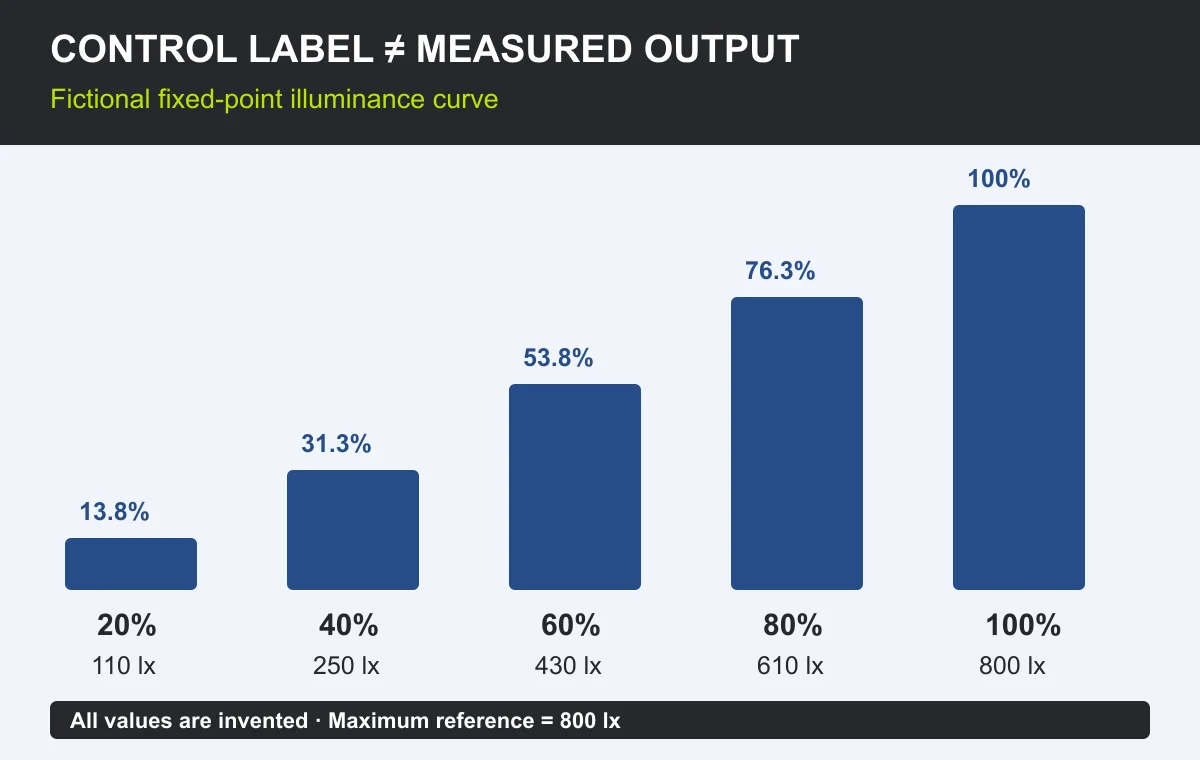
| Control board or firmware | Dimming, touch response, startup state, memory and interaction with charging functions | Revision identifier, change description and results for affected functions plus relevant regression checks |
| Housing material, hinge or finish process | Mechanical fit, strength, movement, appearance and any material properties relied on by the product evaluation | Material/process identification, relevant assembly checks and targeted durability or appearance evidence |
| Insert, carton or printed information | Product restraint, accessory location, protection in distribution, and accuracy of user information | Revised artwork/packing specification and appropriate verification for the actual change |
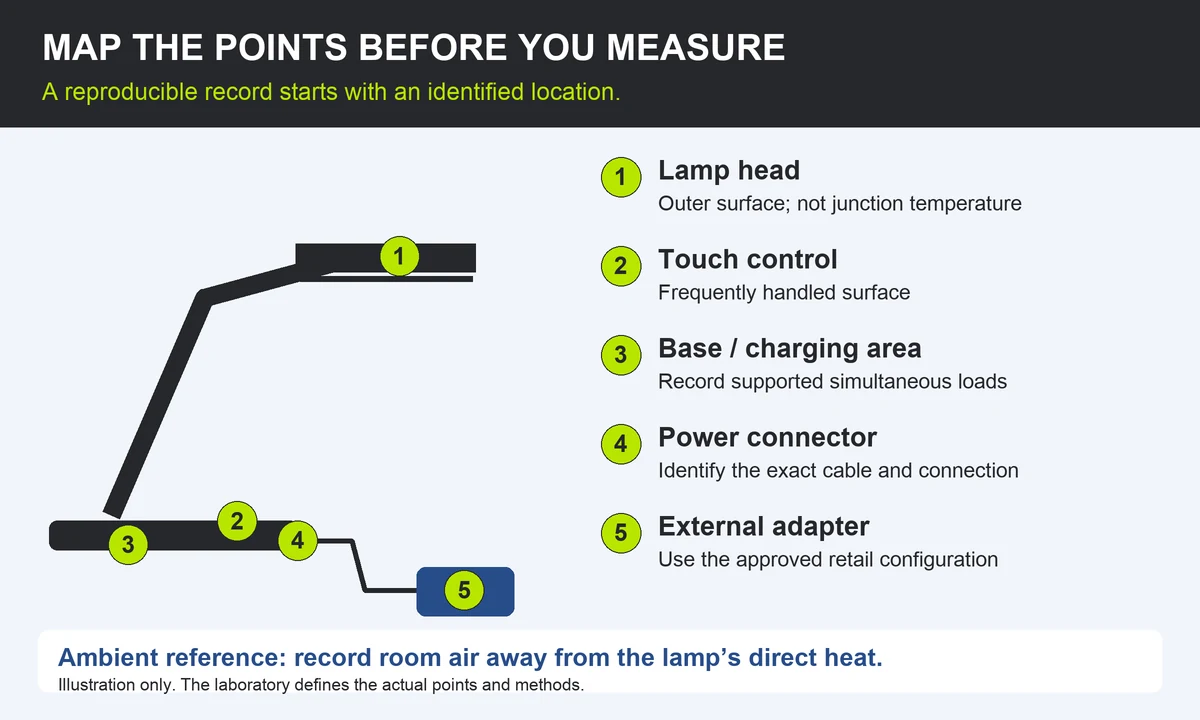
Use the existing dimming verification guide or thermal testing guide when those characteristics are affected. Keep the setup, criteria and sample identities in the comparison; an unexplained “before/after” photograph is weak evidence.
Check the scope of certification and test reports
Do not assume that a report for one construction covers every later substitute. Equally, a component change does not by itself tell you that all previous evidence is invalid. Have the responsible technical reviewer determine what remains covered and whether an amendment or additional evaluation is needed.
For products carrying a UL Mark, UL’s Follow-Up Services guidance explains the relationship between ongoing production, the evaluated construction, and component/material traceability. It also directs manufacturers to seek assistance with construction changes. This is specific to that certification scheme; it does not establish that a particular RoyeLamp model is UL Certified.
Buyer approval and compliance clearance are separate decisions. Purchasing staff can approve the commercial consequences, but should not waive unresolved safety requirements or declare that an old report covers a new configuration without a qualified assessment.
4. Define the first changed lot—and the last unchanged one
Technical approval is only half the transition. You also need to know what is in the warehouse, on the assembly line and inside each carton. An effective date alone is insufficient when old and new components remain available at the same time.
Agree the last lot using the original revision, the first lot using the replacement, and how each is identified. The records should connect finished units to the relevant production revision and order. Internal production codes can be useful without redesigning consumer-facing branding, but they must remain retrievable during a complaint investigation.
A worked example: one reorder, two approved configurations
Illustrative example only: a buyer orders 1,200 lamps. There are 400 complete, approved Revision A kits available. A proposed adapter change creates Revision B, and the supplier plans to supply the other 800 units with that kit.
The buyer should not approve “1,200 of the same model” and leave the split to the packing line. First complete the Revision B review. If both configurations are acceptable for the order and sales channel, document two identified sub-lots: 400 A units and 800 B units. Define the compatible kit, instructions and identification for each. If the order requires one uniform configuration, agree a different supply plan instead.

Do not mix revisions within a carton by default. If mixed packing is permitted, define identification and receiving checks explicitly. Reconcile original stock, changed stock, rejected material and unused packaging so that old labels or incompatible accessories cannot drift into the new lot.
Keep an engineering revision separate from a retail barcode decision. Review the change against the GS1 GTIN Management Standard and the receiving channel’s requirements rather than assuming every internal substitution requires a new GTIN—or that the existing GTIN is always sufficient. Even when the retail identifier stays the same, you still need production traceability.
Also update the spare-parts compatibility record. State whether the new part can serve older units, whether older parts remain usable, and who has verified those conclusions. A clean production transition can still create a service problem if support teams cannot identify the customer’s revision.
5. Close the change with a specific release decision
Use an approval record that states the accepted configuration, supporting evidence, affected orders, remaining conditions and authorized approvers. “Sample received” and “looks fine” should not be interpreted as unrestricted production approval.
- Approved: the defined revision and scope may proceed under the agreed conditions.
- Limited deviation: a documented, permissible exception applies only to the stated quantity, lot or period; it does not permanently replace the baseline.
- On hold: missing evidence or unresolved requirements prevent release of the changed configuration.
For the first changed shipment, give the inspector the revised acceptance record and the lot split. Check part identities through the agreed supplier records or qualified inspection process, confirm packaging versions, and verify that the results belong to the changed configuration. Do not ask untrained staff to dismantle energized lamps.
Review early returns by revision and symptom after receipt. A change may solve one problem while introducing another; combining all complaints under one model name can hide the difference. If an issue appears, use the lot records to define the affected stock before deciding containment and corrective action.
Copy-ready reorder request
Please confirm that this order will use approved configuration [reference/revision]. Before introducing any change to controlled components, materials, software, production arrangements or retail-kit documents, identify the original and proposed versions, reason, affected orders and stock, evidence required, and proposed first changed lot. Do not apply an unapproved change to our order. Obtain written approval from the named reviewers, confirm any required compliance review, and document the old/new stock transition, carton identification and spare-parts compatibility. A limited deviation must state its scope and expiry; silence or sample receipt is not approval.
A compact release record for the first changed shipment
Keep the decision and warehouse instructions on the same record. The fields below can be copied into your purchase-order attachment; they are suggested controls, not a certification form.
| Record field | What to write |
|---|---|
| Change and configuration | Change request ID; old/new revision; exact affected lamp and power-kit identities |
| Evidence and approval | Report and sample references; closed issues; reviewer names, decision and date |
| Order and lot boundary | Purchase order, destination, quantity by revision, last old lot and first new lot |
| Receiving and service | Carton/unit identifiers, packing-list split and verified spare-parts compatibility |
| Exceptions and release | Any permitted deviation, its expiry and scope; named person authorized to release the lot |
Questions buyers often ask
Does every change require a new golden sample?
Not necessarily. Decide whether the physical reference, documents or both need updating. Preserve the link between the approved revision and its evidence; do not overwrite the old record when older stock remains in circulation.
What if the original component is suddenly unavailable?
Ask for a proposal covering remaining stock, qualified alternatives and the delivery consequences. Compare a controlled split, revised schedule or approved replacement. Urgency can justify a faster review, but not treating an unverified substitute as approved.
Can a successful first shipment make later inspection unnecessary?
No. It establishes experience with that shipment, not proof that later construction is identical. Use a risk-based reorder review, supplier confirmation and traceable production records, with targeted checks where something has changed.
Planning a repeat LED desk lamp order?
Send RoyeLamp the previous order reference, approved configuration, target market, quantities and delivery needs. Ask for confirmation of the available configuration and any proposed changes before the new order is finalized.
Source scope: TI is cited as an example of semiconductor change communication; UL guidance applies to its certification scheme; GS1 addresses trade-item identification. The purchasing workflow, tables and fictional lot example are editorial recommendations, not test results, certification claims or pre-agreed supplier commitments.
