

Choosing LED desk lamps for wholesale is not mainly a question of finding the lowest quotation. The expensive mistake is buying a lamp that looks acceptable in a product photo but fails in the sales channel: glare complaints, unstable wireless charging, weak hinges, missing documents, or cartons that arrive crushed after a long shipment. By the time those problems appear, the buyer has already paid freight, tied up inventory, and put customer relationships at risk.
In our experience, the best wholesale decisions start with the selling environment. A lamp for an office furniture distributor, an online private label brand, and a promotional-gift importer may share the same LED board, but they do not share the same risk profile. The right specification is the one that protects margin after returns, testing, packaging, and after-sales service are counted. The sections below focus on the decisions that usually separate a profitable desk lamp program from a cheap purchase that becomes expensive.
Start with the Channel, Not the Catalog
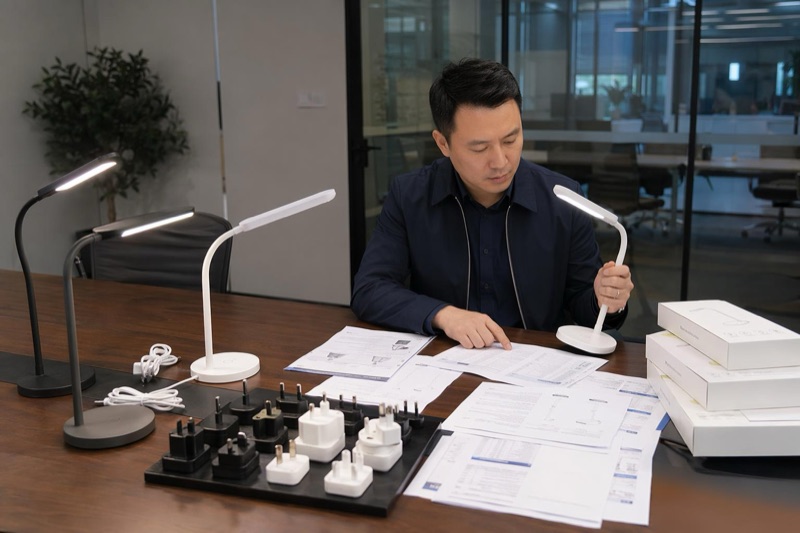
Many buyers begin by asking for “best-selling models.” That shortcut often creates a mismatch. A wireless charging desk lamp with touch controls may sell well online, but a school or office-project buyer may care more about stability, simple switching, and long service life. A clip-on lamp may be excellent for dormitory channels but unsuitable for a corporate procurement program where desk thickness varies and installation complaints create hidden costs.
Before comparing prices, define the channel, retail price band, target certification, plug type, packaging standard, and expected return tolerance. If the lamp will be sold in the EU, CE and RoHS documentation must be part of the project from the beginning, not collected after production [1][2]. If the lamp will be sold through a North American channel, buyers should discuss the applicable safety expectations early, including portable luminaire requirements such as UL 153 where relevant [3]. The mistake is treating compliance as paperwork. In reality, compliance affects driver selection, wiring, adapter sourcing, labels, user manuals, and even carton markings.
Compare Light Quality Before You Compare Features
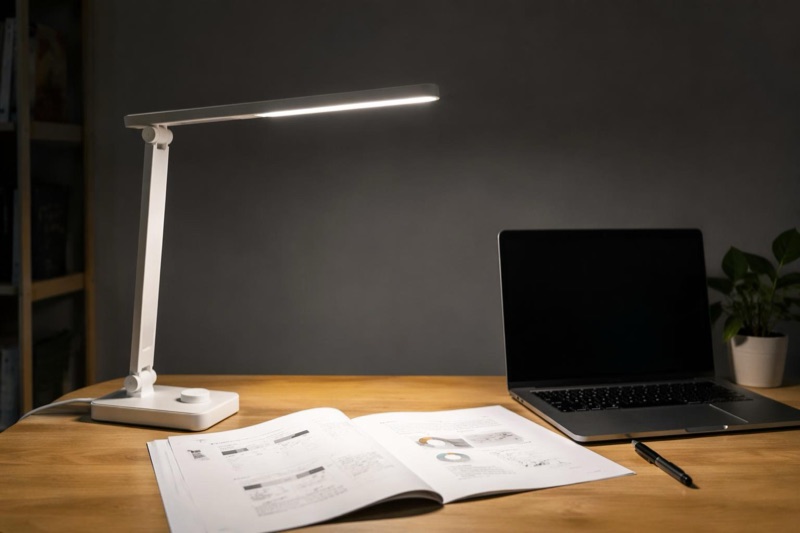
Feature lists are easy to sell: USB output, wireless charging, timer, dimming, multiple color temperatures, memory function. Light quality is harder to judge, but it is what end users feel every day. The most common wholesale mistake is allowing features to cover up poor optical design. A lamp with uneven illumination, harsh glare, or unstable dimming can create returns even when every advertised feature works.
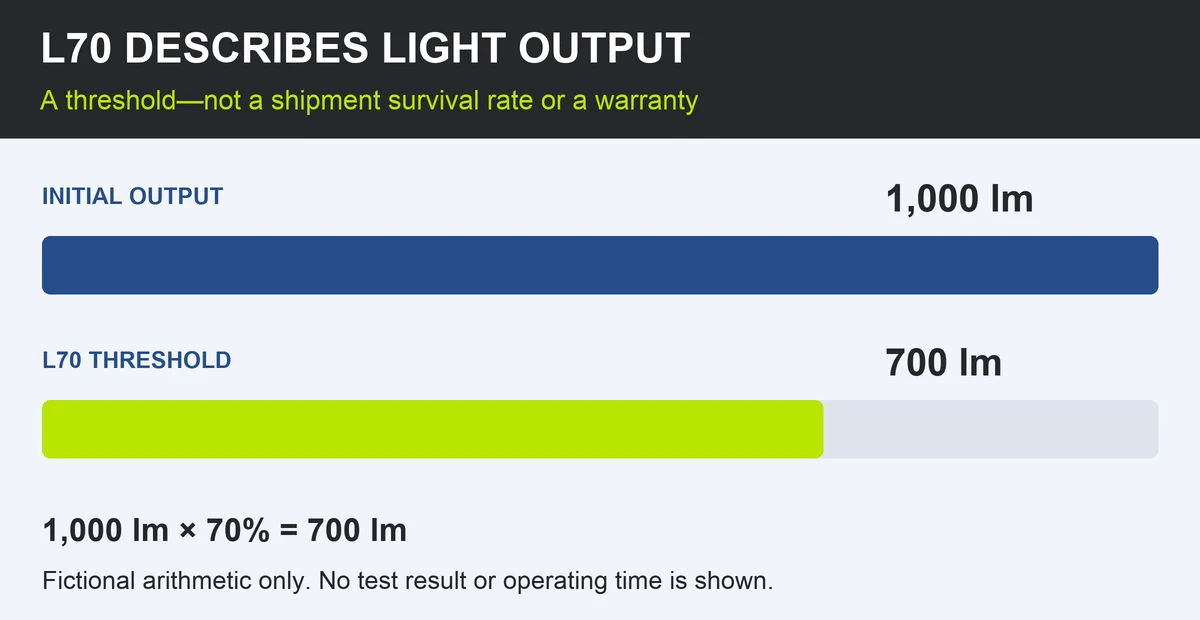
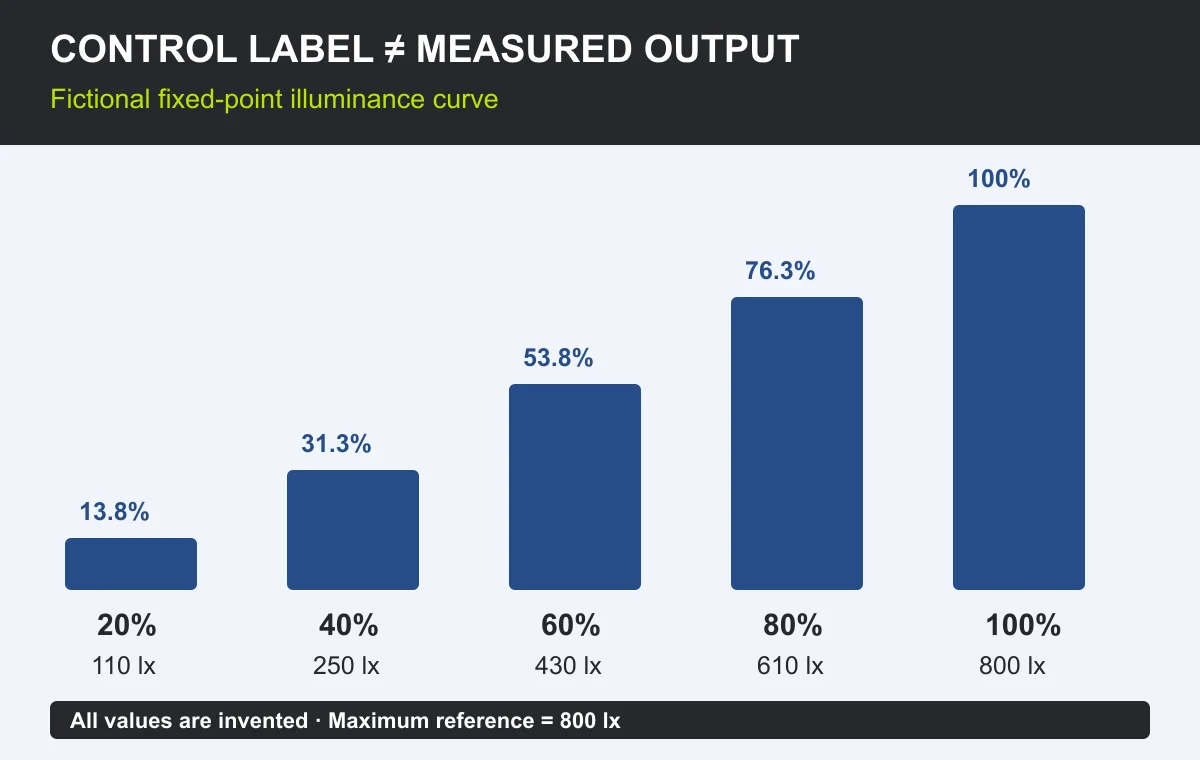
For desk lamps, buyers should ask for illuminance data at realistic working distances, not only lumen output. Lumen output describes total light leaving the source; it does not prove that the work surface is comfortable. Ask how the diffuser, LED layout, arm height, and shade angle control glare. If the product is positioned as an eye-care lamp, request the actual test basis behind the claim rather than accepting the phrase as marketing language. Standards and lighting guidance exist because visual comfort depends on measured performance, not adjectives [4].
Check the Power System and Charging Claims
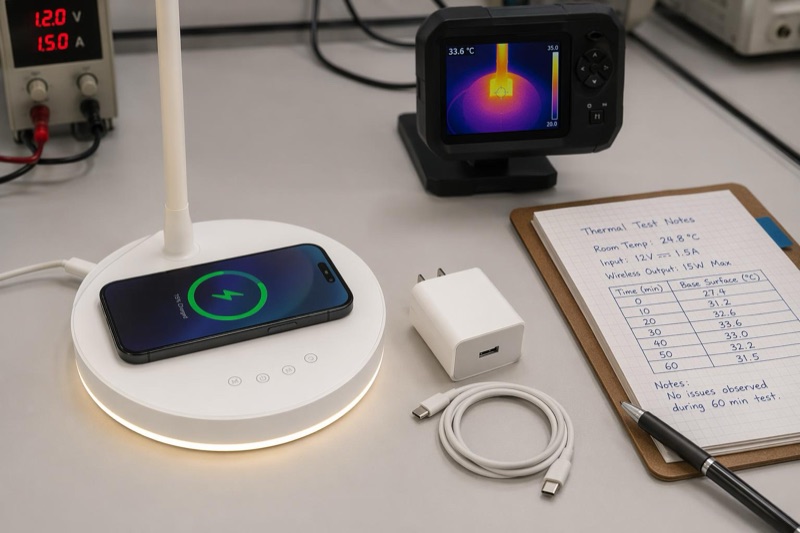
Power design is where many low-cost lamps hide risk. A desk lamp may appear simple, but the adapter, driver, charging coil, USB output, and internal wiring determine safety, heat, and user experience. For wireless charging models, buyers should confirm whether the charging function follows recognized Qi expectations and whether the supplier can provide evidence for compatible design or certification where required [5]. A charging pad that works with one phone during a sample demonstration may still create heat, alignment, or compatibility complaints in mass use.
Ask direct questions: Is the adapter included or optional? Who is the adapter manufacturer? What input voltage range is supported? What is the output rating for USB or Type-C ports? Does wireless charging reduce lamp brightness or create heat in the base during long use? If the lamp has a rechargeable battery, what cell brand, protection circuit, and shipping classification apply? The cheapest quotation may exclude the adapter or use a lower-grade one, shifting cost and responsibility back to the importer.
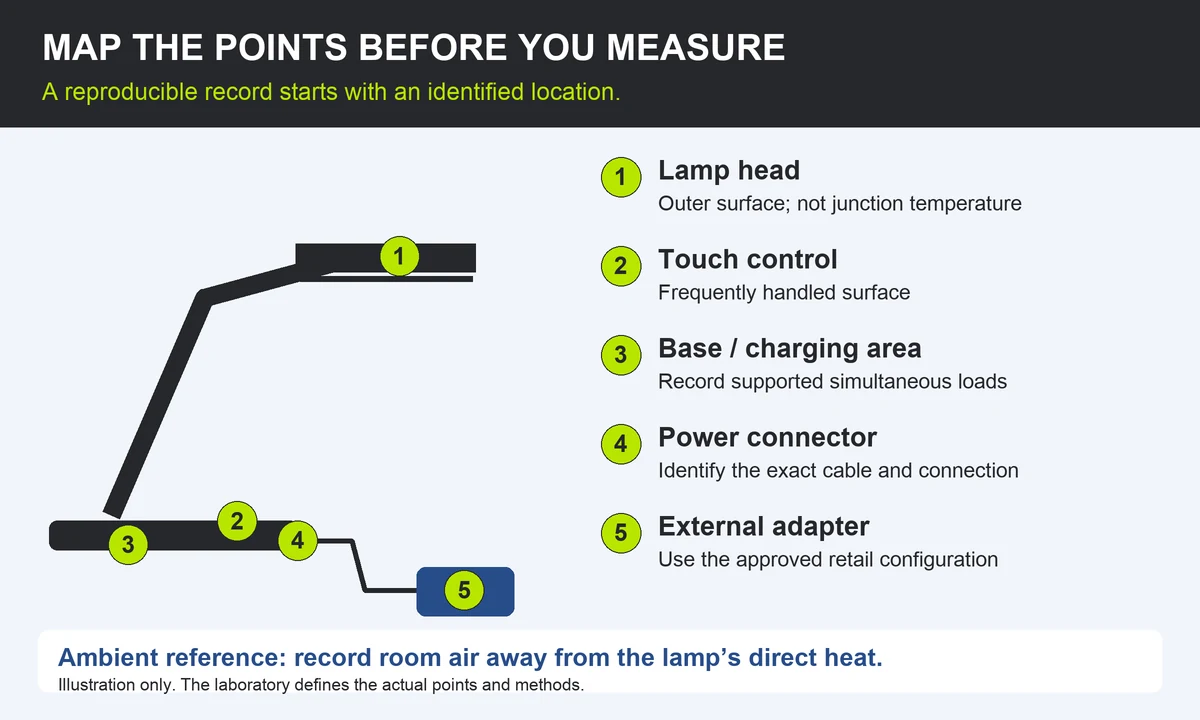
In our experience, a buyer should treat power as a system, not a line item. When a lamp has wireless charging, USB output, and LED lighting in one compact base, thermal design becomes especially important. A stable power system is rarely the cheapest component choice, but it prevents the most damaging after-sales problems: units that stop charging, touch panels that reset, adapters that run hot, or lights that flicker when a phone is placed on the base.
Evaluate Factory Capability Through Process Evidence

A polished sample does not prove a stable production process. Buyers should ask how the factory controls incoming materials, LED binning, driver inspection, aging tests, assembly torque, packaging drop tests, and final inspection. ISO 9001 certification is useful because it points to a quality management framework, but buyers still need project-level controls that match the order [6]. The question is not simply “Do you have QC?” It is “Which failures are you preventing before shipment?”
For a desk lamp manufacturer, process evidence may include LED board inspection records, hinge life-cycle testing, switch function tests, wireless charging checks, burn-in records, and carton drop-test photos. If the order is OEM or private label, add artwork approval, barcode checks, instruction manual verification, and golden sample control. A factory that cannot describe these steps clearly may still make a good sample, but scaling that sample into consistent cartons is a different challenge.
Use Samples to Test Business Risk, Not Just Appearance
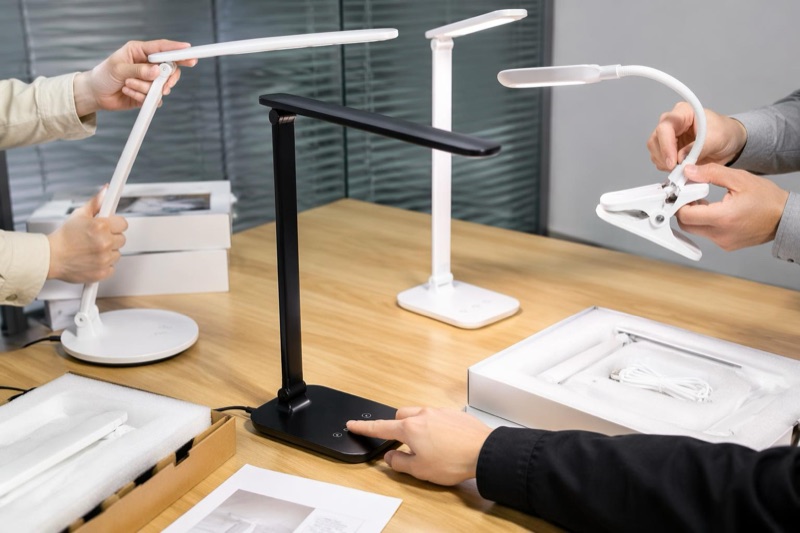
A sample order should answer the buyer’s most expensive questions before bulk production. Does the lamp feel stable? Does the arm stay in position after repeated adjustment? Does the clip grip securely without damaging furniture? Does the touch panel work with dry and slightly damp fingers? Does the carton protect the lamp after courier handling? These questions sound basic, but they are exactly where cheap desk lamps create return costs.
The buyer’s guide in one sentence is this: choose the lamp that best protects the channel, not the lamp with the longest feature list. A manufacturer can help reduce risk, but only when the buyer evaluates the product as a commercial system: compliance, optics, power, mechanics, packaging, and after-sales cost together.
Wholesale desk lamp sourcing rewards buyers who ask operational questions early. The right model should fit the sales channel, meet compliance expectations, deliver comfortable light, use a reliable power system, and survive real handling. Royelamp manufactures LED desk lamps in Huizhou, China, including wireless charging lamps, eye-care lamps, smart multifunctional lamps, clip-on lamps, and floor lamps. For importers, wholesalers, and OEM brand owners, we can support sample evaluation, private label discussion, and bulk production planning with no MOQ, 7-day sample lead time, and typical 30-day bulk lead time.
Match the Lamp to the Buyer Persona
It helps to imagine the exact person who will approve the purchase at the other end of your channel. A facilities manager buying for an office renovation may reject a lamp that feels too decorative, even if consumers like it. A marketplace customer may ignore a simple office lamp if the listing does not show visible benefits such as wireless charging, foldability, or warm-to-cool color modes. A hotel or apartment project buyer may focus on repeatable color, stable bases, easy cleaning, and low after-sales maintenance. These different personas change the right specification.
For example, a distributor serving corporate customers may prefer fewer electronic features because every extra function adds training and support. A private label ecommerce seller may accept more features because product-page conversion depends on visible value. A promotional gift buyer may care most about logo area, color box presentation, and safe performance at a target price. When the buyer persona is clear, the supplier can recommend a lamp that fits the job instead of pushing the most complicated model.
Set Approval Gates Before Production
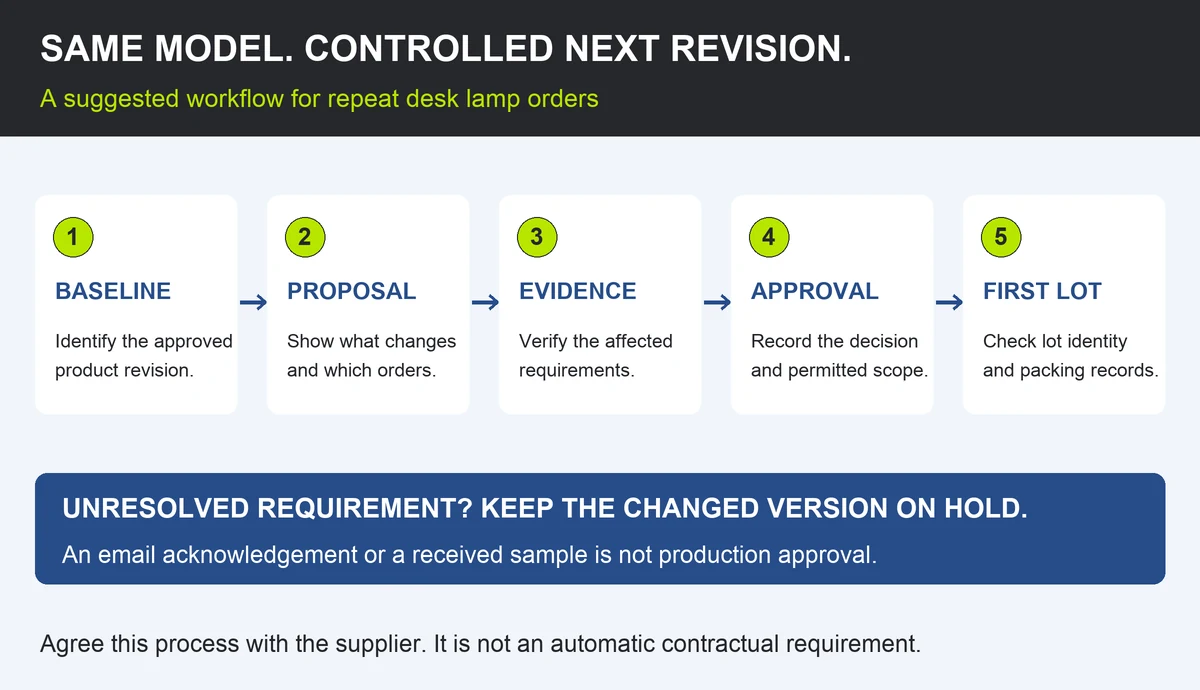
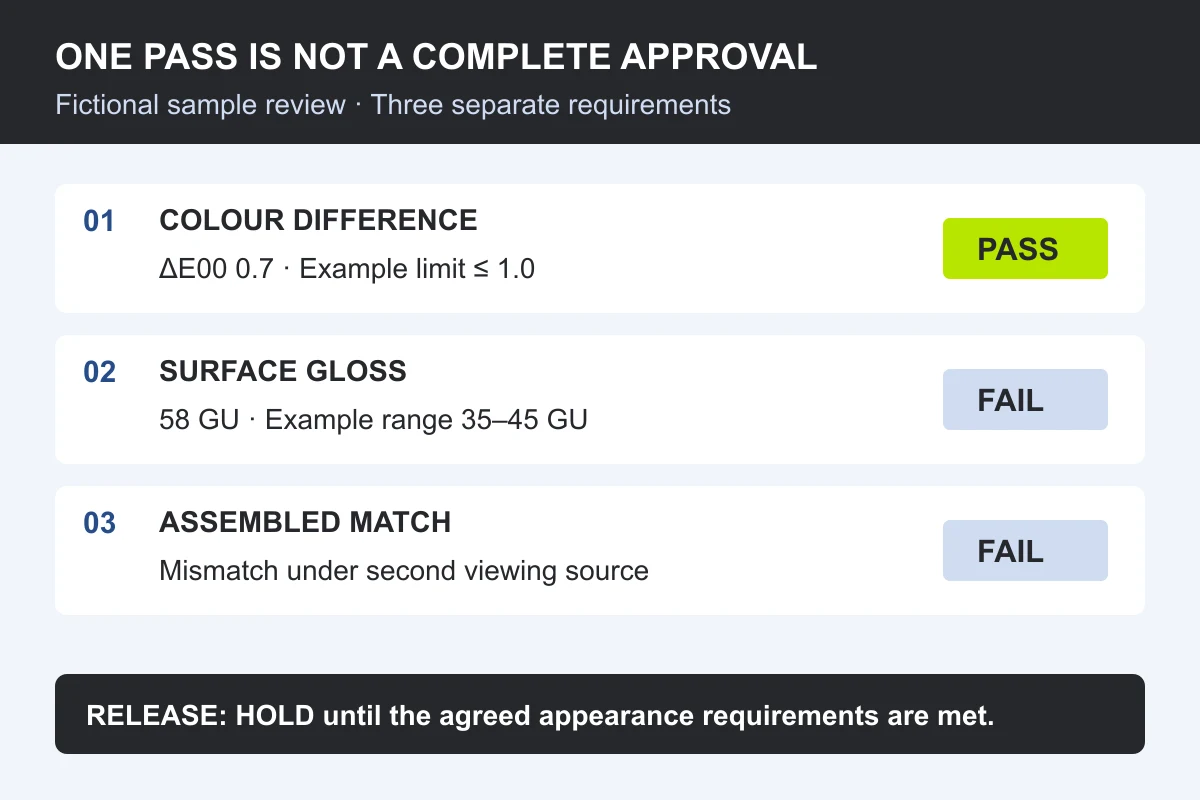
A strong wholesale process has approval gates: first sample, revised sample if needed, artwork confirmation, pre-production sample, production inspection, and final packing confirmation. These gates do not need to be bureaucratic, but they prevent expensive misunderstandings. The pre-production sample should match the final adapter, plug, label, manual, color, logo, and packaging. If the mass-production unit differs from the approved sample, the buyer should know why before shipment.
This matters especially for small trial orders. Small orders are often used to test a channel quickly, so buyers may be tempted to skip approvals. That creates the opposite of speed when a labeling, packaging, or function issue appears after arrival. A disciplined sample process gives the importer a clean reference point for future repeat orders and makes it easier to scale from a trial quantity to regular bulk production.
Finally, compare suppliers by how clearly they answer questions, not only by how quickly they quote. Clear answers about optics, power, packaging, and documentation usually predict a smoother order.
Shortlist models and request a comparable wholesale quote
Turn the checks above into a short buying brief: intended sales channel, model, quantity, destination country, power supply and plug, logo requirements, and packaging. Ask suppliers to separate product, sample, branding and shipping costs so that you compare the same scope.
- RY26-A foldable desk lamp: a catalogue starting point for an adjustable desktop format.
- RY229-C dual-head clamp desk lamp: compare when desk attachment and work-surface coverage matter; verify desk fit before ordering.
- RY2230-M bedside charging lamp: compare when bedside use and charging functions are part of the brief; confirm the exact power configuration.
Without a custom logo: MOQ 10 units. With your logo: MOQ 100 units. Paid samples are available. Lead time: 15–30 days; confirm the order schedule. Custom packaging, special configurations and sample timing are quoted separately.
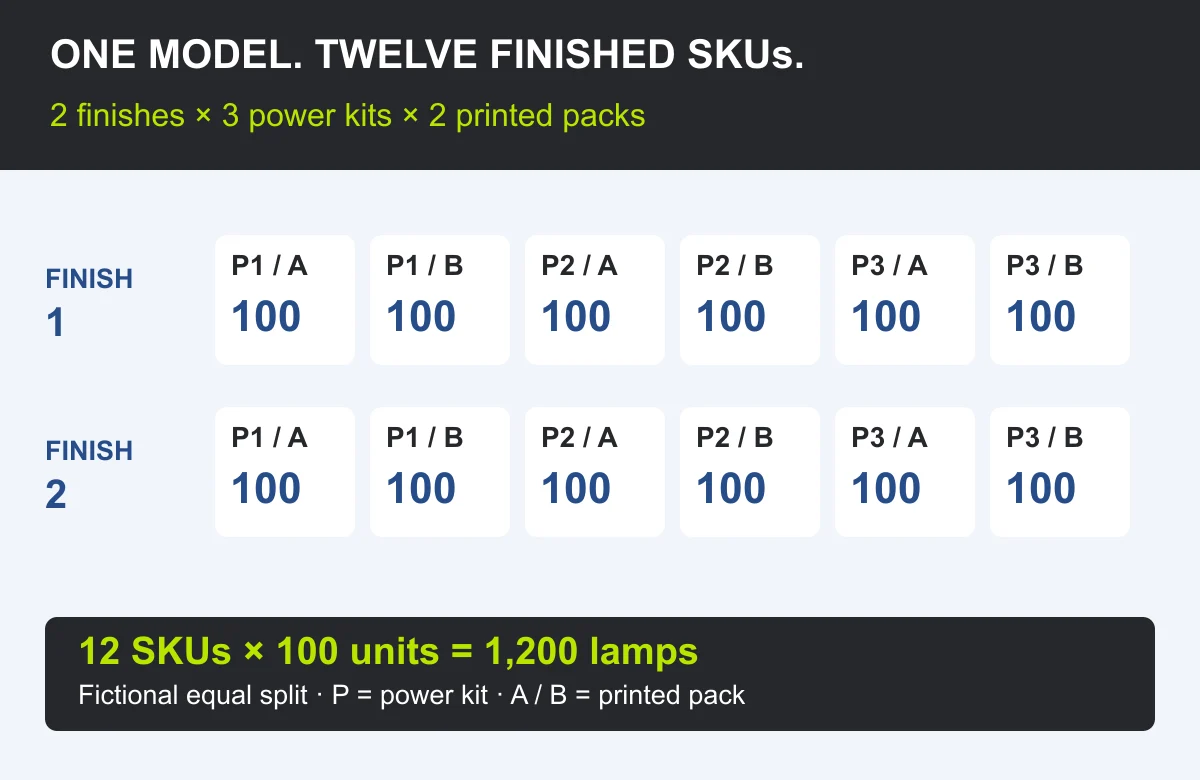
Use the MOQ and SKU planning guide to define the assortment, then review the sample approval checklist before a bulk order.
Compare the full wholesale catalogue | Send your model shortlist for a quotation
