

The best desk lamp for a sewing workstation depends on what needs light: the fabric moving beside the machine, a cutting mat, or a few stitches being checked through a magnifier. For sewing-machine dealers and craft retailers, choosing by task gives customers a clearer reason to buy than a list of brightness modes.
This buying guide compares two RoyeLamp options for your sample shortlist: the T229 dual-head clamp lamp, previously listed as RY229-C, and the RY01 magnifying desk lamp. It explains where each format can fit, what to demonstrate in store, and how to request a complete wholesale quotation.
Choose a wide, adjustable task-light format for fabric handling and work across a table. Choose a magnifying lamp for a smaller detail that the user needs to inspect closely. A magnifier complements a work-area lamp; it does not replace lighting across a cutting mat or the full sewing table.
Match the lamp to three different sewing tasks
A customer may sew at one station but move between several visual tasks. The needle area, the fabric beside the machine and a hand-sewing project do not occupy the same space. Ask which area is difficult to see before choosing a lamp.
| Customer task | What to evaluate | Sample starting point |
|---|---|---|
| Machine sewing and piecing | Light on the seam guide and approaching fabric, with room for hands and machine controls | T229 positioned around the existing machine light |
| Pattern layout and fabric preparation | Coverage across the actual work area, ruler reflections and clearance for fabric movement | T229 dual-head layout; measure coverage at the intended mounting height |
| Hand sewing, stitch inspection and small repairs | Lens clarity, working distance and room for hands beneath the lens | RY01 magnifying desk lamp |
Start by checking the machine’s own lighting. For example, Janome describes a retractable needle-area light on selected machines. An additional table lamp should address the remaining work area in that particular setup. It should not be sold as a necessary upgrade for every machine.
These RoyeLamp models are external task lamps. They are not replacement sewing-machine bulbs or machine-mounted electrical accessories.
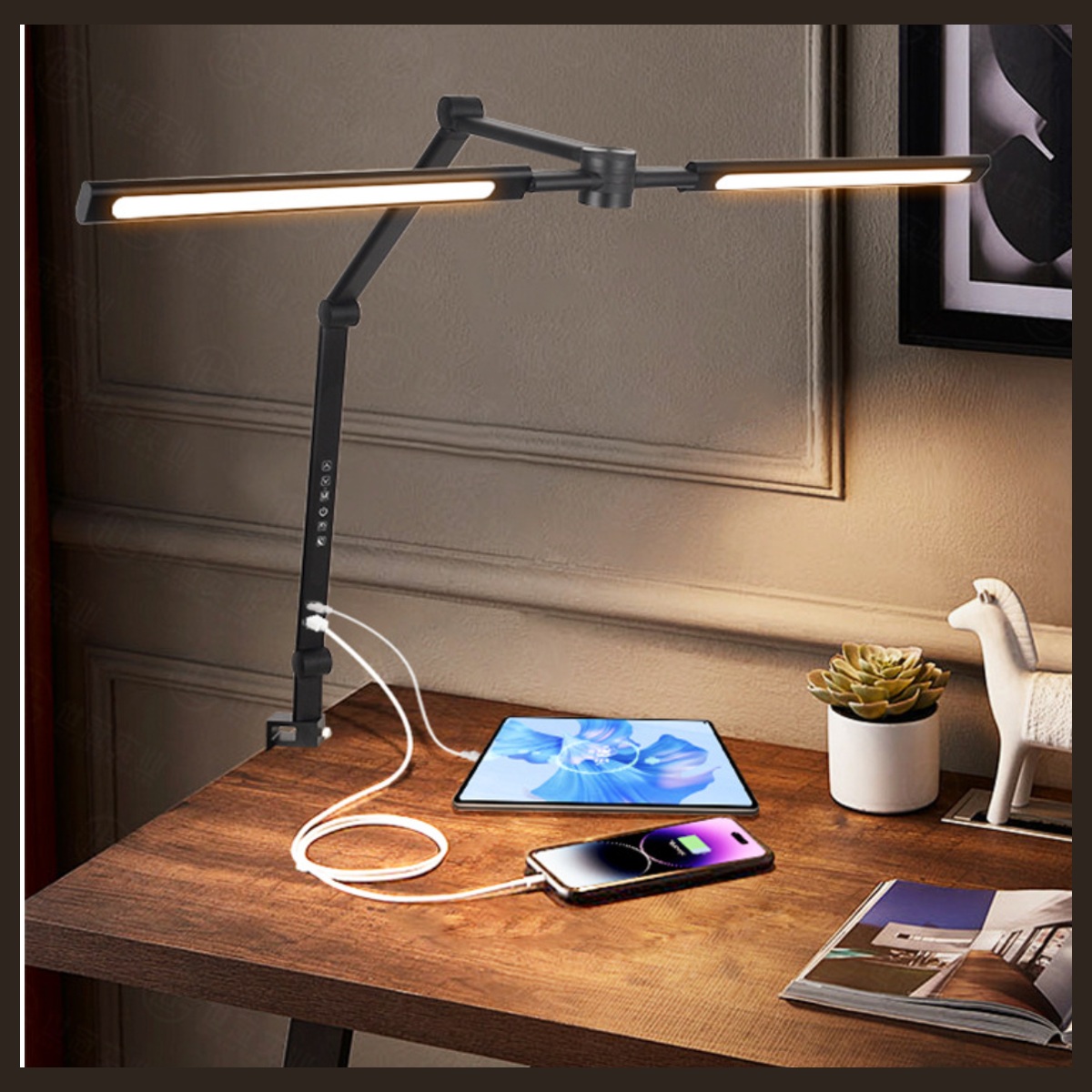
T229: a dual-head lamp for a wider work area
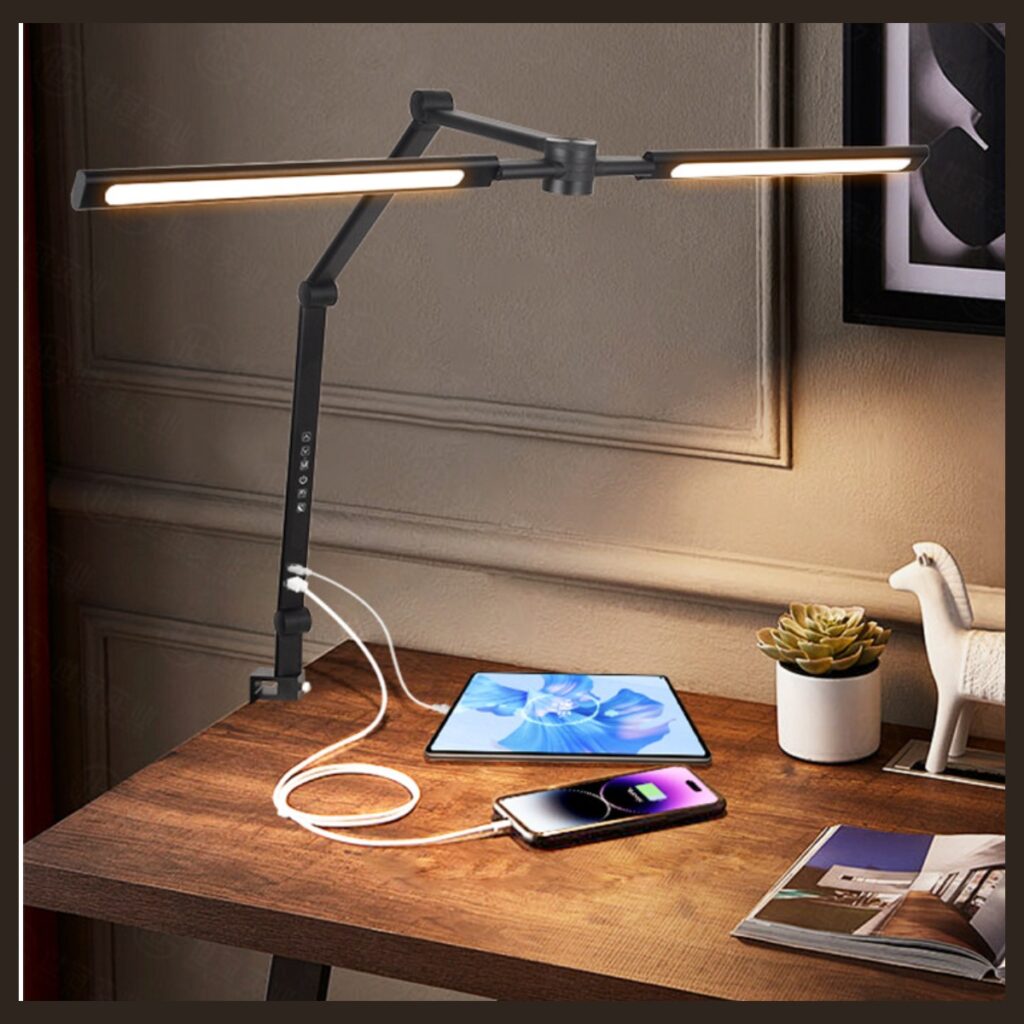
Keep the table available for fabric
The desk clamp removes the need for a lamp base on the work surface. Two adjustable, removable heads and articulated arms provide positioning options around the machine and adjacent fabric area.
The current product page lists 1200 lm output, five colour-temperature modes and five brightness levels. Use those controls to evaluate the intended work area at a repeatable setting.
For a sewing-machine dealer, a useful demonstration is a machine with a notebook-sized pattern sheet and fabric laid beside it. Show how the heads can be repositioned while keeping the controls, thread path and fabric feed accessible. The commercial benefit is easy to explain: an adjustable lighting arrangement with no freestanding base occupying the sewing surface.
Approve the actual reach and lit area on your sample. The stated 1200 lm is a light-output figure, not proof of a particular lux level across a cutting table. A large quilting table may need a different arrangement from a compact machine station.
Request a paid T229 sample for your workstation →
RY01: a magnifier for close handwork and stitch checks
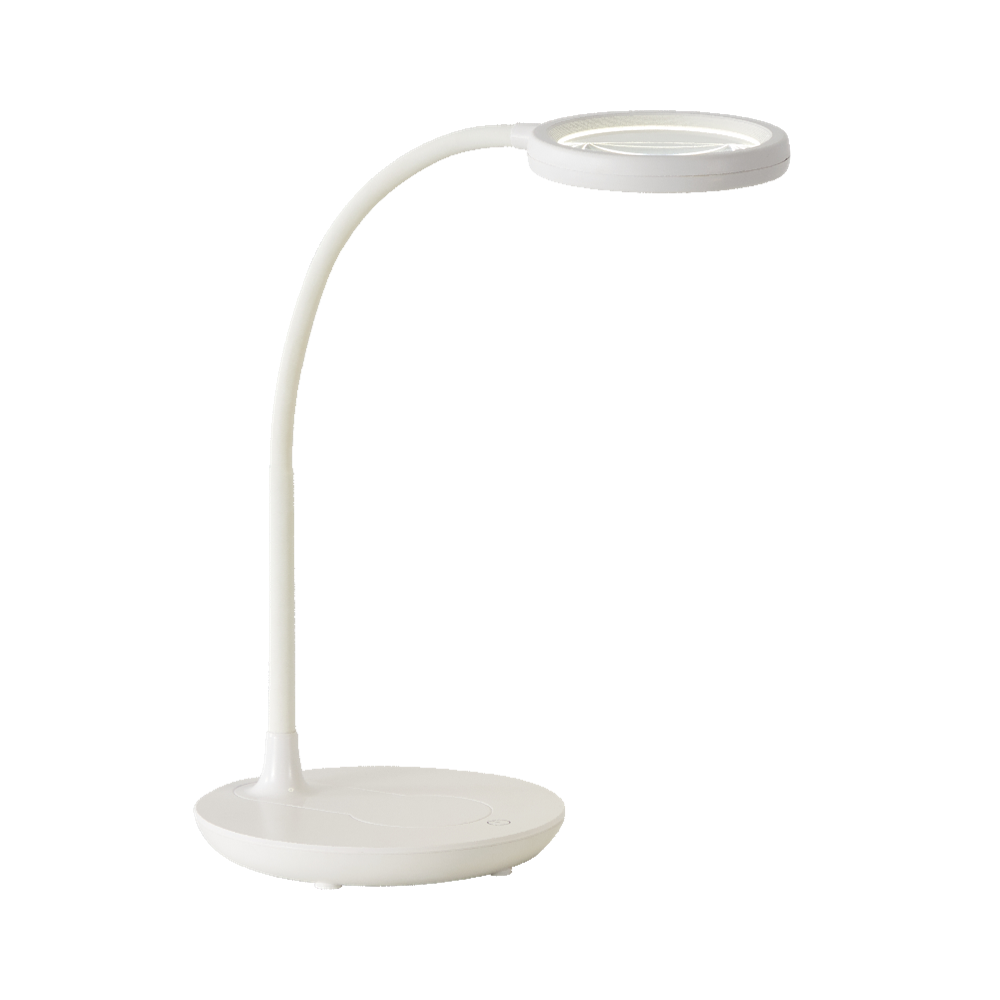
Make the detail the centre of the demonstration
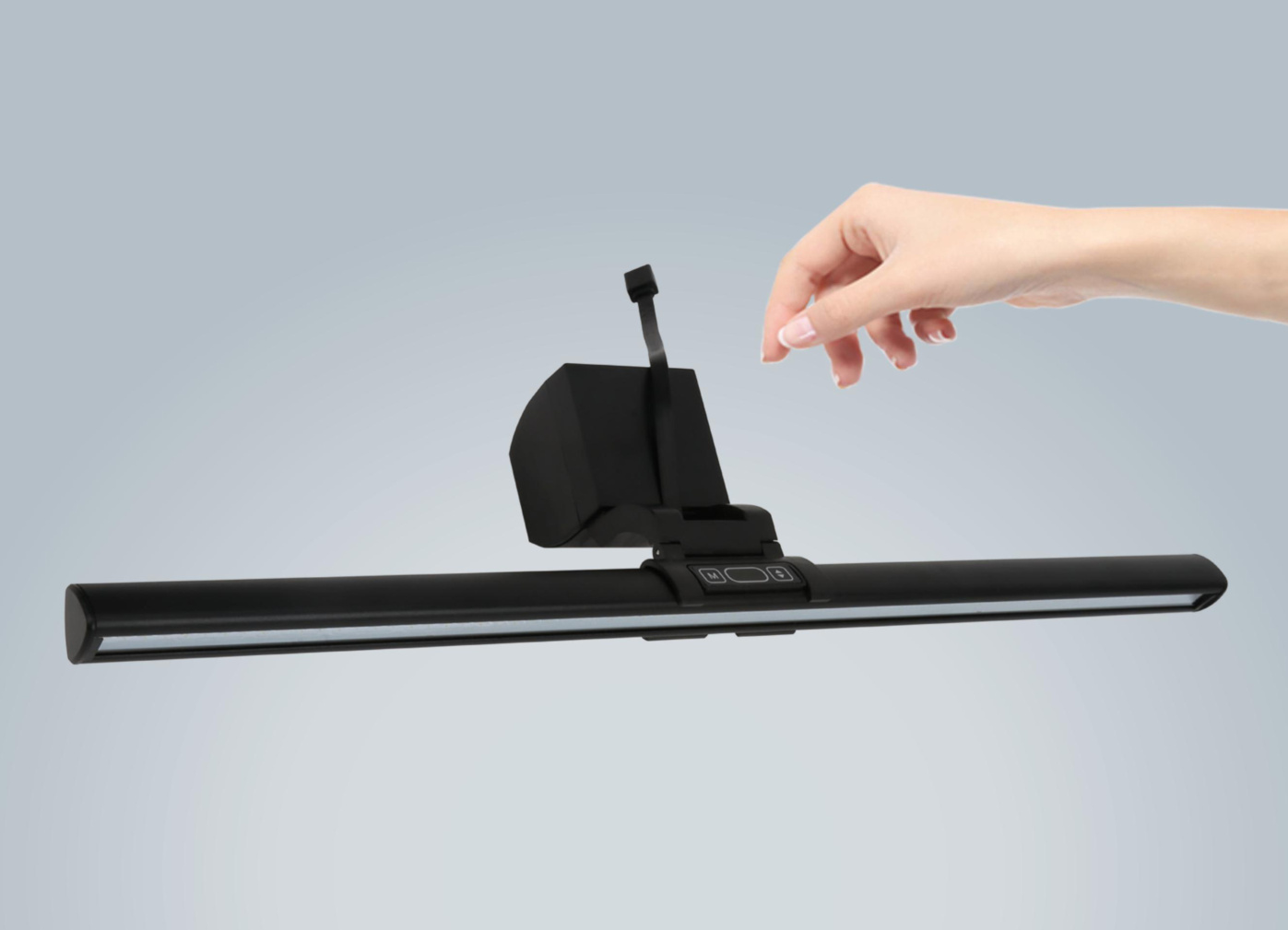
RY01 offers a compact format for viewing small stitches, examining a seam or checking handwork. The flexible neck lets the buyer evaluate the lens position against the actual task.
Its published specification lists 5W power, 250 lm, 4000K light and 5V/1A input. Request the numerical magnification, lens size and working-distance information for the proposed configuration.
A craft-store demonstration can use the same stitched fabric viewed with and without the lens. Let the user position the sample, look at the centre and edges of the viewing area, and move their hands naturally beneath it. Comfortable working space matters as much as the apparent enlargement.
Keep RY01 positioned as a close-work option. A magnification number alone does not establish the usable viewing area or suitability for a particular hand-sewing technique. For a more detailed lens approval brief, see our magnifying desk lamp wholesale guide.
Check shadows, reflections and room for the fabric
A lamp can look convincing on an empty showroom desk and become inconvenient once the machine, extension table, rulers and fabric are in place. Use a representative station for sample approval.
- Mark the actual task area. Include the seam guide, fabric approaching the needle and any separate pattern-reading or handwork position.
- Check from the seated viewpoint. Position the lamp with the machine stopped, following the relevant instructions. Check whether hands, the machine body or the user’s head obscure the light.
- Use ordinary materials. Include dark fabric, pale fabric and the rulers or glossy pattern sleeves the customer uses. Change the lamp angle to check reflections.
- Move the full project through the space. Confirm clearance for the fabric, machine lid, thread spool, handwheel and controls. Route the lamp cable away from moving parts and the fabric path.
- Record the chosen setup. Photograph the mounting position and note the head arrangement, brightness mode and colour setting. Use that record for the retail demonstration and repeat orders.
For handwork, test the person’s usual grip and movement. A position that suits one user may cast a shadow for someone working from the opposite side. Give the customer an adjustment method rather than promising one universally correct lamp position.
Separate colour temperature from colour matching
A warmer or cooler appearance is one selection factor; accurate comparison of thread and fabric is another. Colour temperature does not, by itself, establish colour-rendering quality.
T229’s current specification lists 3000K, 3500K, 4200K, 5000K and 6000K modes. RY01 lists 4000K. If a customer needs to compare similar thread colours, include those actual materials in the sample review and request colour-rendering evidence for the configuration being quoted.
Keep the light setting and room conditions consistent when comparing samples. For critical shade approval, use the buyer’s specified reference-lighting procedure; do not treat a general task lamp as a certified colour-matching booth. A retailer can still demonstrate brightness and colour modes clearly without making an unsupported “perfect colour accuracy” claim.
Confirm the clamp, base and complete power set
Send thickness, edge profile and underside photographs. Include drawers, rails or an extension table that could obstruct the clamp.
Check adjustment, joint retention and stability with the machine and fabric in their normal positions.
Confirm the supplied adapter, cable length and destination plug before comparing quotations.
T229’s page describes a clamp opening up to approximately 60 mm. That is a starting point for fit review, not approval for every table below that thickness. The contact surfaces, underside clearance and load direction also matter. For edge-profile photographs to include in an enquiry, use our clamp compatibility guide.
T229 lists a 13.5V input. RY01 lists 5V/1A input. Keep the correct power set identified for each model, and confirm what is included in the box. T229 also lists USB and Type-C device outputs with PD 18W; treat charging as a separately checked accessory feature, not the main reason to recommend a sewing lamp.
For RY01, check that the base remains stable at the lens positions the customer will use. For either model, repeat adjustments during the agreed evaluation and inspect whether the selected position holds. Use a demonstration sample that matches the configuration you intend to sell.
Build a retail range customers can understand
Give each approved SKU one clear role: T229 for adjustable lighting around a wider table area; RY01 for illuminated close-up viewing. This makes the models complementary and gives staff a practical way to qualify an enquiry.
A useful staff question is: “Do you need light across the fabric, or do you need to enlarge a small detail?” Follow that with the machine or table dimensions. The answers guide the demonstration and help identify a fit problem before the sale.
For the first order, specify quantities by model and finish rather than asking for a single mixed total. Include demonstration units, instructions, logo requirements and packaging artwork. RY01 packaging should protect the lens; T229 packaging should protect the heads, joints and clamp. Agree the packed configuration and carton dimensions before estimating freight or shelf space.
RoyeLamp lists a starting MOQ of 10 units without a custom logo and 100 units with your logo, with paid samples available. Confirm the MOQ for each model and customization. The listed 15–30 day order lead time is subject to the agreed configuration and production schedule; sample timing and custom packaging are quoted separately.
A buying brief that leads to a useful quotation
Copy and adapt this enquiry
We supply [sewing-machine dealers / quilt shops / craft retailers / teaching studios] in [country]. We would like to evaluate T229 and/or RY01 for the attached workstation.
- Task: machine sewing, pattern layout, handwork or stitch inspection.
- Setup: machine model, table dimensions, edge thickness and photographs of the work area.
- Quantity: first-order quantity by model and finish, plus demonstration samples.
- Configuration: destination plug, power accessories, logo, instructions and packaging.
- Sample evidence: coverage and adjustment for T229; lens specification and working distance for RY01.
- Quotation: sample cost, model-specific MOQ, artwork/setup charges, carton data, production timing and delivery terms.
For a private-label programme, include the claims you plan to print on the box. Agree which specifications and documents support those statements before artwork approval. This keeps the retail offer aligned with the sample and the written order.
Sewing-lamp buying questions
Is a magnifying lamp better than a normal sewing lamp?
It is useful when the task needs enlargement within the lens’s working area. For fabric handling across a wider table, evaluate an adjustable task light. Some retail ranges can use both formats for different needs.
How bright should a lamp for sewing and quilting be?
Specify the area to illuminate and the installation height first. A lumen figure cannot establish desk-level illumination on its own. Compare samples on the same workstation and request measurements when your project has an illuminance requirement.
Is T229 the same model as the older RY229-C listing?
The current RoyeLamp page identifies T229 as the factory model and RY229-C as the previous website model. Use T229 in the enquiry and attach the product link so the quotation names the correct configuration.
Can a shop evaluate samples before ordering branded stock?
Yes. RoyeLamp offers paid samples. Send the intended task, quantity and destination, then agree the model configuration, sample timing and branding approval steps.
Source sewing and craft lighting for your range
Send RoyeLamp a workstation photograph, estimated quantity and destination country. Ask us to review T229 for wider task lighting, RY01 for magnified detail work, or both. Enter the model names in the form and include your requirements for a configuration-specific quotation.
Written by Helen. Product information checked against the linked RoyeLamp pages on November 26, 2026. Sewing applications described here are sample-evaluation scenarios; final specifications and terms follow the approved sample and written quotation.
