

Buying cordless table lamps for a restaurant is a fleet decision. One lamp must look right beside the menu; the whole order must be ready for service, easy for staff to handle and practical to recharge before the next shift.
For restaurant groups, hospitality distributors and private-label buyers, the useful comparison goes beyond the unit price. This guide covers table fit, usable runtime, charging capacity and the complete quotation, with RoyeLamp’s T2511 rechargeable decorative lamp as an option to evaluate for indoor ambient table lighting.
Approve a sample on a fully set table, run it through your intended service period, and rehearse the staff charging routine. Then freeze the lamp, power accessories, finish, instructions and packaging in the quotation. A battery-capacity figure alone does not establish service-ready runtime.
A warm decorative option: RoyeLamp T2511
Warm light with a textured shade
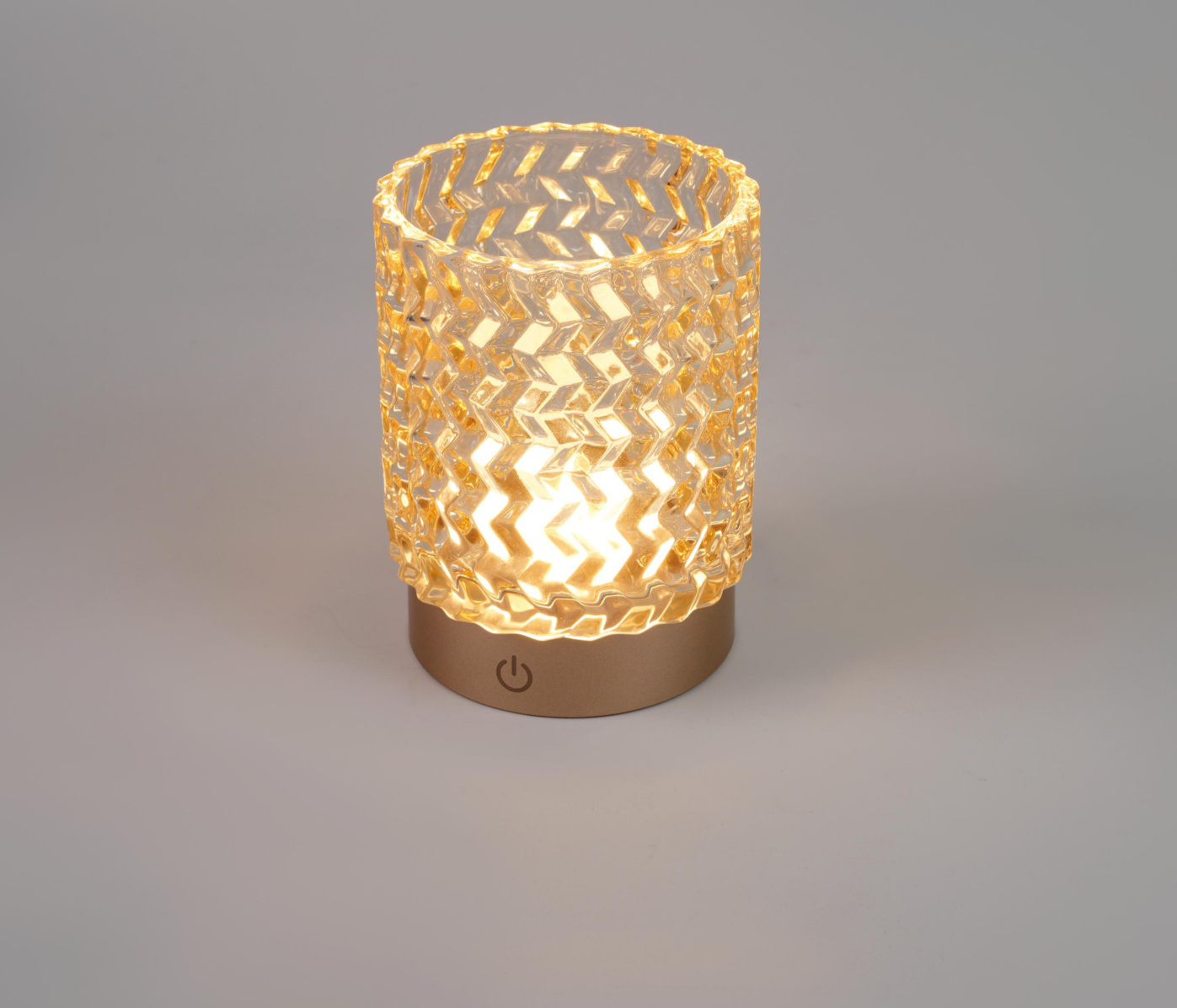
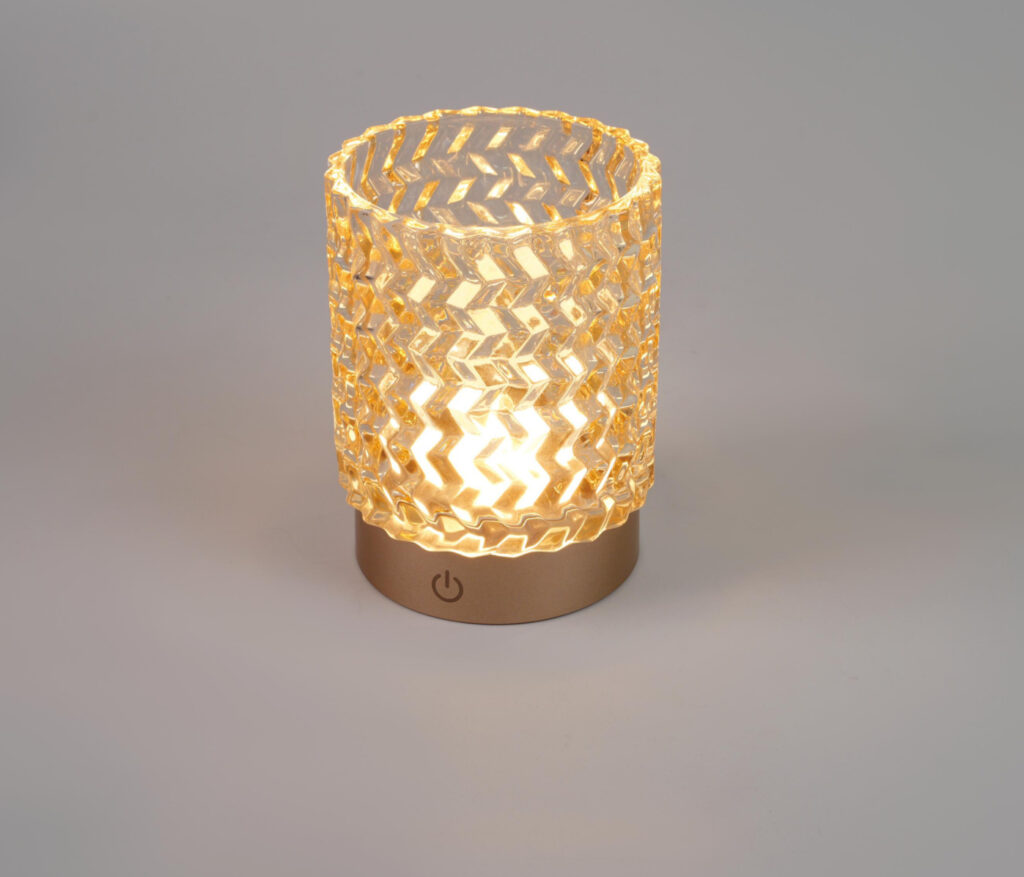
T2511 offers a different starting point from a tall shaded table light: its illuminated patterned body becomes part of the table setting. The catalogue lists 3000K warm light, 220 lm output and a 1200mAh rechargeable battery.
Its decorative appearance makes it a candidate for an indoor café, lounge or restaurant concept where the lamp is part of the ambience. Confirm the dimensions, brightness controls and runtime against the actual service brief.
RoyeLamp currently lists orders from 10 units without a custom logo and 100 units with your logo, with paid samples available. This gives buyers a route from a sample evaluation to an unbranded first order or a branded programme. Confirm the selected configuration, packaging and schedule in your quotation.
T2511’s published data does not specify runtime, charging time, a dimming range or an ingress-protection rating. These are quotation and sample-review items. For outdoor terraces, wet areas or a requirement to last an entire evening at a particular brightness, ask for a configuration with evidence matching that requirement before selecting it.
Request a paid T2511 sample for your table setting →
Write the restaurant lighting brief in operational terms
Describe where and how the lamps will be used. A two-hour lounge event, a dinner service and lunch-to-close operation create different charging and stock requirements. Give suppliers the same brief so their proposals can be compared.
| Buying question | Information to supply | Evidence to request |
|---|---|---|
| Where will the lamp sit? | Table dimensions, place settings, menu, glasses and decorations | Sample dimensions and an actual table-fit review |
| How long must it operate? | Switch-on time, last seating, closing routine and required reserve time | Usable runtime at the agreed brightness and mode |
| When can staff recharge it? | Time between services, storage space and charging locations | Charging time, accessories and a workable batch plan |
| What environment will it face? | Indoor or outdoor placement, cleaning routine and handling | Model-specific use instructions and relevant protection evidence |
| How will the order be sold or deployed? | One venue, a multi-site rollout, wholesale resale or private label | MOQ, branding scope, packaging, carton data and replenishment terms |
Distinguish a cordless rechargeable lamp, which runs from its battery when disconnected, from a lamp offering wireless phone charging. For restaurant tables, the key question is whether the lamp itself can operate without a trailing cable during service.
Test the light on a fully set table
Place the sample among the plates, water glasses, cutlery, menu and any vase or condiment holder used in the venue. Review it from each occupied seat. A lamp that looks attractive in a product photograph may compete with the table setting or place a bright light source directly in a guest’s view.
Check the menu in the normal dining-room lighting, including its smallest print and any glossy surfaces. If the goal is ambience, assess the lamp alongside the room lighting. If guests also need it to read, verify that task separately. Total lumens do not show how much light reaches the menu.
For T2511, pay particular attention to the patterned appearance of the illuminated body and the light falling around its base. Compare the effect on the actual tabletop, tablecloth and glassware. Ask for material and finish specifications rather than inferring them from the photograph.
Have service staff rehearse placing plates, clearing the table, carrying the lamp and operating its control. Record the preferred location, the usable table space it leaves and any handling difficulty. These observations help a distributor recommend the product to an appropriate venue instead of relying on a generic “restaurant lamp” description.
Specify usable runtime at the setting you will use
For a restaurant buyer, useful runtime ends when the light no longer meets the agreed table-lighting requirement. A lamp that remains faintly illuminated has not necessarily completed the intended service.
Write the requirement as a service window plus a deliberate time allowance. For example, a venue planning five hours of operation might ask suppliers to demonstrate six usable hours at the selected setting. This is an illustrative purchasing requirement, not a stated T2511 runtime.
- Identify the complete sample. Record the lamp version, battery specification, charging accessory, brightness setting and operating mode.
- Charge according to the supplied instructions. Note how a full charge is indicated and how long charging takes under the agreed conditions.
- Run the intended service sequence. Check the table at the start, during service and at the required end time. Record changes in output and any low-battery indication.
- Repeat with several samples. Look for differences between units and keep the results attached to the approval record.
Request the supplier’s runtime test conditions alongside the result. If brightness adjustment is available, a headline runtime at a low setting may not describe your chosen setting. A short sample trial also does not establish long-term battery performance; agree the warranty and service terms separately.
For a more detailed battery purchasing brief, use our rechargeable lamp battery guide alongside the model-specific sample results.
Plan charging capacity before deciding the order quantity
A dining room needs both lamps and a repeatable charging routine. Ask who collects them, how charged and uncharged units are separated, where cables are stored and how staff identify a unit that needs attention.
Count the lamps after service and separate units requiring inspection.
Use the approved charging equipment in the designated location, following its instructions.
Confirm charge status and function before returning lamps to tables.
Check whether the proposed configuration uses individual cables or an approved multi-unit charging arrangement. Confirm connector type, cable inclusion, required power supplies and the number of lamps that can charge at once. A suitable multi-unit charger should be part of an agreed configuration; its availability should not be assumed.
If a venue chooses one lamp per table and six ready spares, it needs 36 units in rotation. If the available charging window allows only one complete charging batch, the plan must accommodate all 36 units, or identify which fully charged units will carry over. The six-spare allowance is an example, not a recommended ratio. Set your reserve and charging capacity from the verified runtime and operating schedule.
For T2511, the catalogue lists 5V / 1A input and a non-detachable battery. Confirm the charging connection and complete power set in the quotation. Include the proposed remedy for a battery or charging fault in the after-sales agreement; do not plan around a user-replaceable battery when the specified version is non-detachable.
Agree cleaning, handling and replacement arrangements
Obtain care instructions for the approved shade, body and finish. Share the venue’s cleaning method with the supplier and review it on a sample using the approved procedure. Check whether routine handling leaves marks and whether staff can clean the shape conveniently.
Request written guidance for spills and charging-port exposure. Cordless operation does not establish water resistance. T2511 has no published ingress-protection rating in its catalogue information, so outdoor or wet-area use requires a separately supported specification.
For a distributor or multi-site buyer, ask how a replacement lamp is matched to the original finish, controls and charging accessories. Keep the model and revision in your purchasing record. Confirm whether replacements are supplied as complete units or as approved parts, and who handles assessment and transport.
Compare the complete order cost, not just the lamp price
Put quotations on one basis: the same quantity, finish, supplied charging set, packaging and shipping terms. List samples, logo setup, custom packaging and any required model-specific testing separately.
Lamp quantity × agreed unit price, plus charging equipment, branding/setup, packaging, freight and applicable import charges. Separately record operating work and the agreed service reserve. Obtain actual figures for your destination; a low unit price alone does not show the cost of a ready-to-use deployment.
RoyeLamp’s T2511 page lists a 15–30 day order lead time, subject to the final configuration and schedule. Sample timing and custom packaging are quoted separately. Work back from the required arrival date and allow for approval, production, transport and receiving checks rather than treating production time as a delivery promise.
Send an enquiry that a supplier can quote accurately
Restaurant cordless table lamp RFQ
We are sourcing rechargeable table lamps for [restaurant / café / hotel lounge / hospitality distribution] in [country]. Please review T2511 for the attached table setting and confirm whether the proposed configuration can meet our service requirements.
- Quantity: [table lamps] plus [reserve units], across [number of venues].
- Service: [hours of operation] at the required table-lighting level, with [time allowance].
- Charging: [available hours], [storage space] and the required complete charging set.
- Environment: [indoor location], table dimensions and cleaning procedure.
- Branding: [unbranded / logo], finish, manual language and packaging requirements.
- Please confirm: dimensions, control settings, tested runtime, charging time, included accessories and model-specific documents.
- Please quote: paid samples, MOQ, unit and setup costs, carton data, service terms and delivery basis to [destination].
Questions restaurant buyers ask
How long should a cordless restaurant table lamp last?
Specify the venue’s complete service window and an appropriate allowance, then require evidence at the intended brightness. There is no single runtime that suits every venue. T2511’s runtime must be confirmed through the quotation and sample review.
Can T2511 be used on outdoor dining tables?
Its published catalogue information provides no ingress-protection rating. Request an appropriately documented configuration for outdoor use; do not infer suitability from its rechargeable design.
Can we start with a small unbranded order?
The current T2511 page lists a 10-unit MOQ without a custom logo and a 100-unit MOQ with your logo. Paid samples are available. Confirm the order mix, packing and schedule before approval.
Plan your restaurant lamp order with RoyeLamp
Send your table photo, quantity, destination country and service hours. We can review T2511 against your brief, confirm the required sample checks and prepare a configuration-specific quotation.
Written by Helen. T2511 product information and listed order terms checked on November 24, 2026. The approved sample and written quotation define the final configuration.
