

You're trying to create the perfect workspace, but your lighting is a constant source of frustration. The shadows fall in the wrong places, the glare on your screen is distracting, and you just can't get comfortable, which hurts your productivity and causes eye strain.
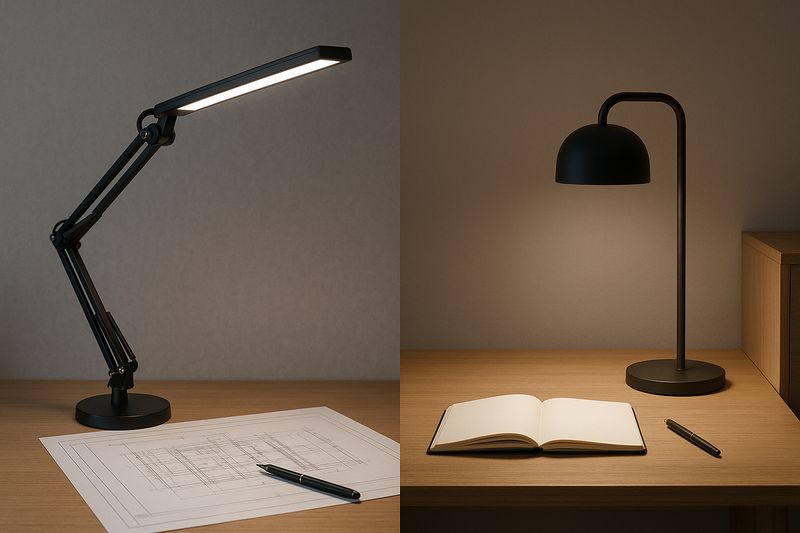
Adjustable LED desk lamps provide dynamic flexibility in positioning, brightness, and color, adapting to any task. Fixed lamps offer stylistic consistency and dedicated, unchanging illumination for a specific zone.
This choice is about more than just a lamp; it's about designing your environment for focus and comfort. Let's dive into which type of flexibility truly suits your needs.
Does Your Light Need to Move With Your Workflow?
You find yourself constantly shifting between tasks—reading a book, typing on your laptop, sketching in a notebook—but your light source remains stubbornly in one spot. This forces you to lean into awkward positions just to see properly, leading to neck pain and eye fatigue as you fight against poorly cast shadows.
The core advantage of an adjustable lamp is its physical articulation. Its ability to pivot, extend, and rotate puts a perfect beam of light exactly where you need it, for whatever you are doing, instantly.
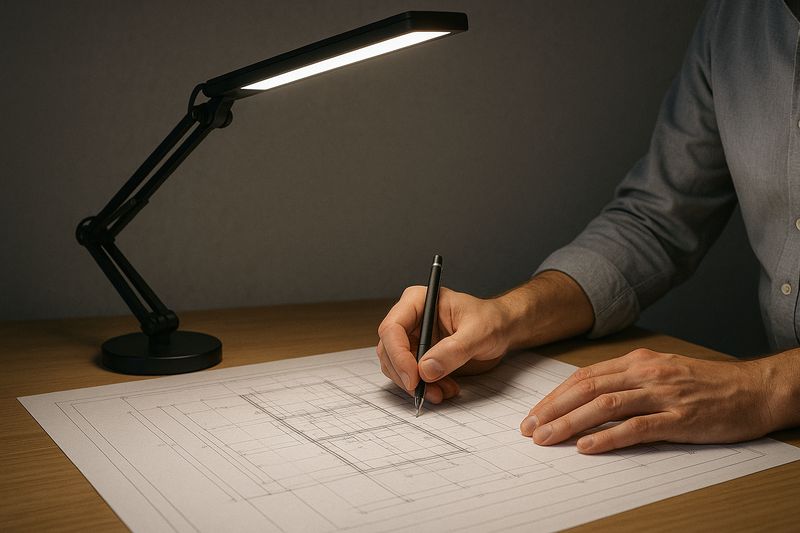
As a manufacturer, I've seen firsthand how critical this feature is. I was working with an engineering firm that was outfitting its new design studio. Their engineers work with massive, intricate schematics and then switch to dual-monitor computer work. A fixed lamp would be a disaster. It would either be too far away to illuminate the fine details on the paper or too close and create a hot spot of glare on their screens. They needed a lamp with a long reach and multiple pivot points. We supplied them with our multi-joint arm lamps. An engineer could pull the lamp head down close to the schematic, then effortlessly push it up and away to provide broad, indirect light when focusing on their monitors. This isn't just a convenience; it's a fundamental requirement for their workflow. Positional flexibility removes friction from the work process, allowing professionals to stay focused on the task, not on fighting their equipment. It transforms the lamp from a static object into an active tool.
The Anatomy of Movement
Not all adjustable lamps are built the same. The type of articulation determines how you can use the light. A gooseneck1 lamp offers incredible fluidity within a limited range, allowing for soft curves and angles. A multi-joint arm2 lamp, with distinct pivot points at the base, middle, and head, provides a much greater range of motion and structural stability, perfect for extending over large surfaces. The choice depends on the scale of your work.
Ergonomics and Your Health
The ergonomic benefits of an adjustable lamp are immense. By directing light to eliminate shadows and reduce glare, you naturally maintain a healthier posture. You stop hunching over or craning your neck to see better. Proper task lighting is a cornerstone of an ergonomic workspace, and an adjustable lamp is the most effective way to achieve it. It allows you to bring the light to your work, instead of bringing your work—and your body—into a fixed pool of light.
| Feature | Gooseneck Lamp | Multi-Joint Arm Lamp | Fixed Lamp |
|---|---|---|---|
| Reach | Limited | Extensive | None |
| Positional Precision | Good | Excellent | N/A |
| Stability at Extension | Moderate | High | Excellent (Static) |
| Best Use Case | Reading, small desks, laptops | Large desks, drafting, crafts, multi-tasking | Ambient light, single-task zones |
Is "One-Size-Fits-All" Lighting Harming Your Eyes and Focus?
Your desk lamp has one setting: on. It feels blindingly bright in the evening when you're trying to wind down, yet not quite right for detailed work in the middle of the afternoon. This mismatched, inflexible lighting is a constant, low-level irritant that contributes to eye strain and can even disrupt your body's natural energy cycles.
True lighting flexibility extends beyond position to include control over the light itself. Adjustable lamps often feature dimming and color temperature tuning, allowing the light to adapt to you, not the other way around.
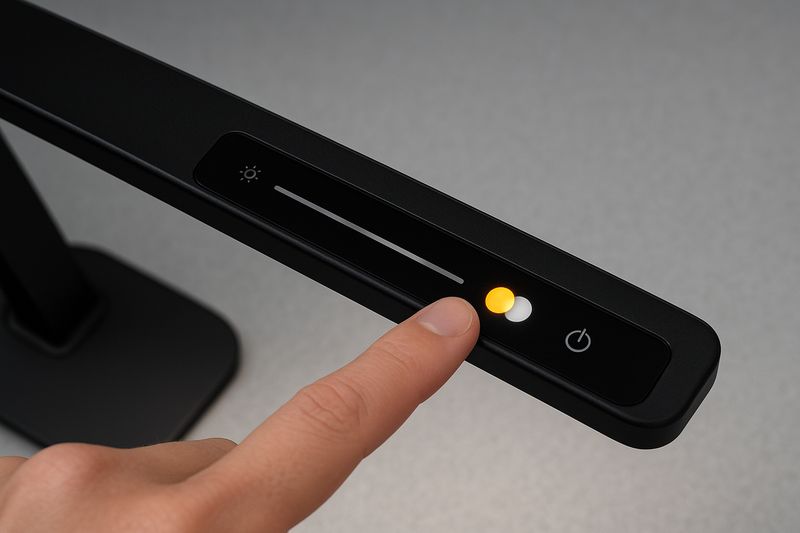
This is a topic I'm passionate about because it bridges the gap between industrial design and human biology. In our R&D lab at Royelamp, we don't just measure lumens; we study how different light qualities affect people. A fixed lamp that only produces one color and brightness of light is like a radio stuck on one station. It might be the right station for one specific moment, but it's wrong for all the others. We had a buyer from a large corporation who was skeptical about the need for color temperature control. I sent him two lamps to use for a week: one fixed at a cool 4000K, and one of our adjustable models. He called me back amazed. He explained that he used the cool, blueish light setting during the day to stay alert for video calls and spreadsheet work. But after dinner, he switched the same lamp to a warm, amber glow for reading. He said it completely changed how he felt in his own office, making it feel less like a sterile workspace and more like a part of his home.
The Science of Color Temperature (CCT)
Color temperature3 is measured in Kelvin (K) and describes how "warm" or "cool" a light appears. A low CCT (around 2700K) produces a warm, yellowish, candle-like glow that is calming and relaxing. A high CCT (5000K+) produces a cool, bluish, daylight-like light that boosts alertness and focus. The ability to change the CCT allows you to synchronize your artificial lighting with your body's natural circadian rhythm, using cool light for focus and warm light for relaxation.
Why Dimming is Not Just a Bonus Feature
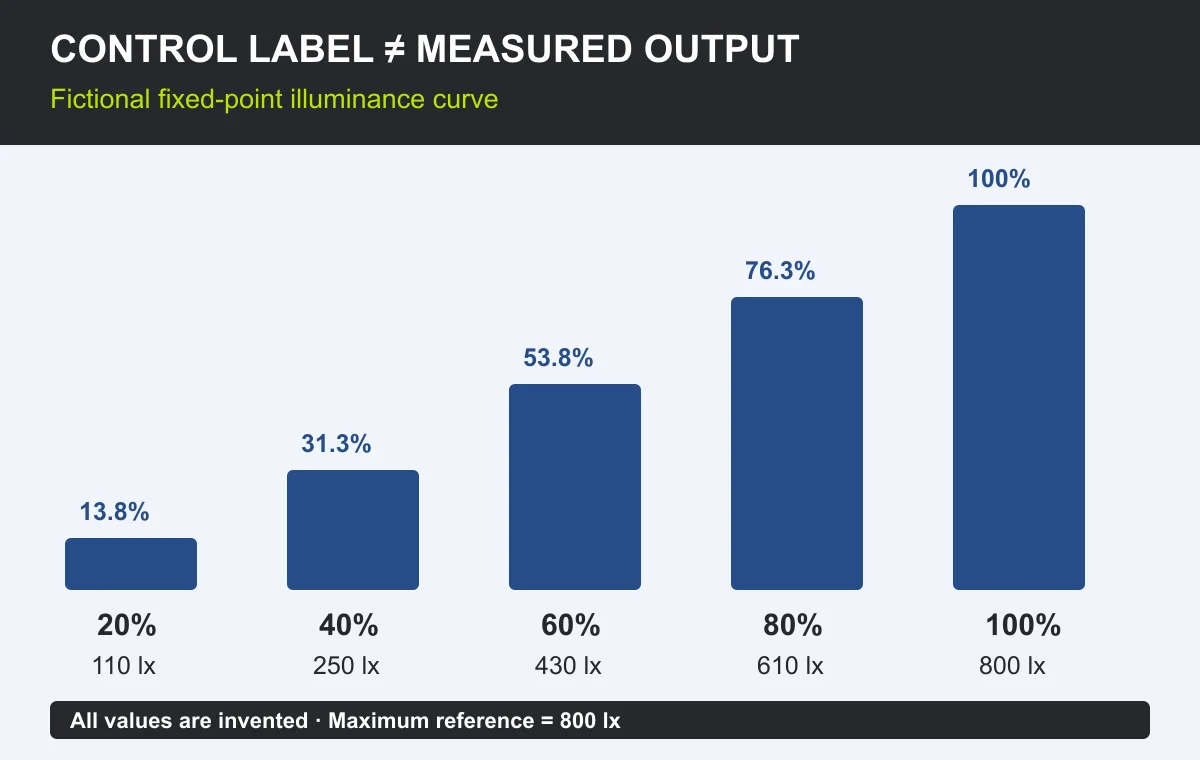
The brightness of your environment changes throughout the day. A lamp that doesn't dim will create harsh glare on your computer screen in a dark room or feel underpowered in a sunlit one. Stepped or stepless dimming allows you to balance the lamp's output with the ambient light, creating the perfect contrast ratio to prevent your eyes from constantly re-adjusting. This is arguably the single most important feature for preventing digital eye strain4.
| Task / Time of Day | Recommended CCT | Recommended Brightness | Rationale |
|---|---|---|---|
| Mid-day Analytical Work | 4000K - 5500K (Cool White) | High | Mimics natural daylight to promote alertness and concentration. |
| Reading a Physical Book | 3000K - 4000K (Neutral White) | Medium | Provides good contrast for text without being harsh. |
| Video Conferencing | 3500K - 4500K (Neutral) | Medium-High | Offers clean, natural-looking facial illumination. |
| Evening Relaxation | 2700K - 3000K (Warm White) | Low | Reduces blue light exposure, signaling your brain it's time to wind down. |
Should Your Lamp Be a Tool or a Statement Piece?
You need a lamp, but you're also designing a space with a specific aesthetic. A hyper-functional, multi-jointed lamp might look out of place on your minimalist desk, while a beautiful, sculptural fixed lamp might be completely impractical for your detailed hobby work. This conflict between form and function can be paralyzing.
An adjustable lamp is a high-performance tool designed for utility, while a fixed lamp often functions as a design element, contributing to the room's overall style and ambiance with a static, predictable light.
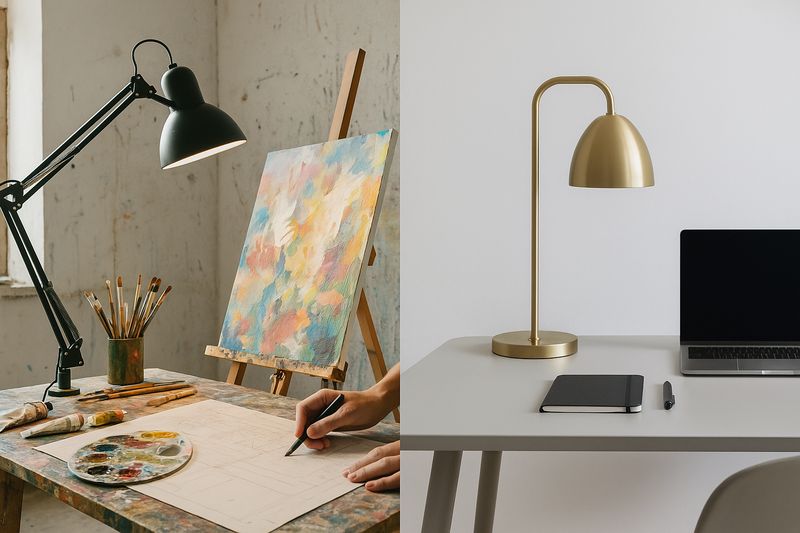
I often discuss this exact trade-off with clients, particularly interior designers and buyers for furniture retailers. Their primary concern is often the lamp's visual impact. Fixed lamps excel here. They can be bold, sculptural, and integrated into a specific design language—be it mid-century modern, industrial, or minimalist. The light they produce is part of their design. I remember one boutique hotel project where the designer chose a specific fixed brass lamp for the desks in every room. The lamp wasn't for task work; it was there to create a defined, warm, luxurious pool of light that made the desk feel inviting. The consistency was the point. For them, a flexible lamp with exposed joints and arms would have destroyed the clean, uniform aesthetic they were crafting. Conversely, I have clients in the tech industry who see lamps as pure hardware. They want function above all. An adjustable lamp is like a piece of high-performance gear—its form is dictated by its function. The exposed mechanics, the multiple joints, the long reach—these are not design flaws; they are features that communicate the lamp's capability as a serious tool.
Fixed Lamps as Anchors
A fixed lamp acts as a visual and functional anchor. It defines a zone. This is the "reading spot." This is where you sign documents. Its light is predictable and consistent, which can be calming and help build routines. They are specialists, designed to do one thing perfectly, day after day. Their lack of moving parts also means a simpler construction, which can sometimes translate into greater durability or a more refined finish for the price.
Adjustable Lamps as Chameleons
An adjustable lamp is a generalist, a problem-solver. Its value lies in its ability to transform. It can be a task light for focused work, then be re-angled to bounce light off a wall for soft, ambient illumination. It can be folded up and pushed aside to clear the entire desk surface for a large project. This adaptability makes it a better long-term investment for people whose needs might change over time. It's less of a static decoration and more of an active partner in your work.
| Attribute | Fixed LED Desk Lamp5 | Adjustable LED Desk Lamp6 |
|---|---|---|
| Primary Role | Design Element / Ambiance Creator | Functional Tool / Task-Solver |
| Aesthetic | Consistent, often sculptural, minimalist | Utilitarian, often mechanical, architectural |
| Versatility | Low | High |
| Best For | Creating a specific mood, single-purpose areas | Multi-purpose workspaces, changing needs |
Conclusion
Choose a fixed lamp for style and consistency. Choose an adjustable lamp for ultimate control over your workspace lighting.
-
Explore the advantages of gooseneck lamps for flexibility and comfort in your workspace. ↩
-
Discover how multi-joint arm lamps enhance ergonomics and lighting efficiency for various tasks. ↩
-
Understanding color temperature is essential for creating the right ambiance in your space. ↩
-
Explore effective strategies to reduce digital eye strain and enhance your comfort while using screens. ↩
-
Explore the advantages of Fixed LED Desk Lamps for creating a calming and focused workspace. ↩
-
Discover how Adjustable LED Desk Lamps can adapt to your changing needs and improve your productivity. ↩
